John H. MacMillan's lecture "Black Gold Dilemma" explores the volatility of oil prices and the geopolitical impacts on energy security, focusing on the U.S.'s dependency on imported oil, particularly from OPEC nations. MacMillan discusses the dramatic drop in oil prices in 1986, the potential consequences of conflicts in the Persian Gulf, and the long-term challenges posed by the reliance on finite fossil fuel resources. He emphasizes the need for strategic energy planning, considering alternatives to petroleum to ensure a sustainable energy future. The paper also examines shifts in energy consumption patterns and the importance of developing new energy sources.
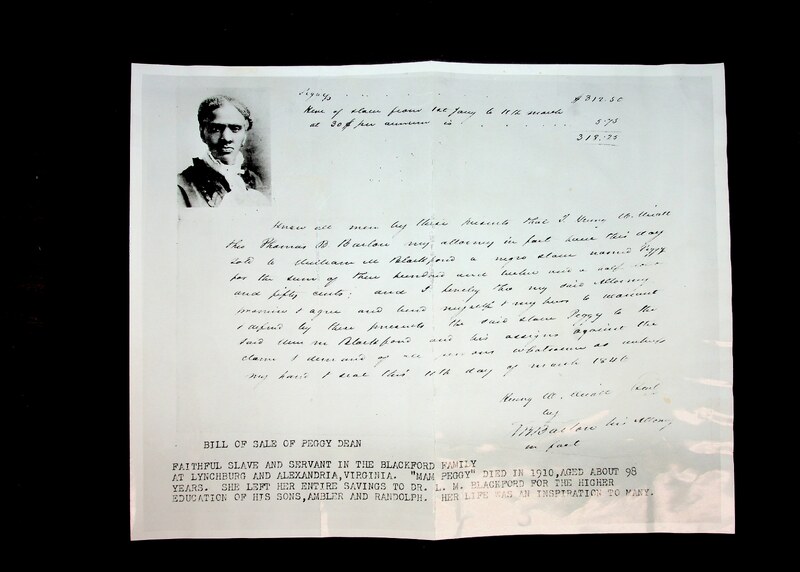
Digitized scan of a Bill of Sale recording the sale and transfer of enslaved person Peggy Dean to Charles Minor Blackford in March 1846.
The original document, which has been partially laminated, is held in JML Manuscript 1793, the Blackford Family Collection, Box 1, Folder 22 at Jones Memorial Library in Lynchburg, Virginia.
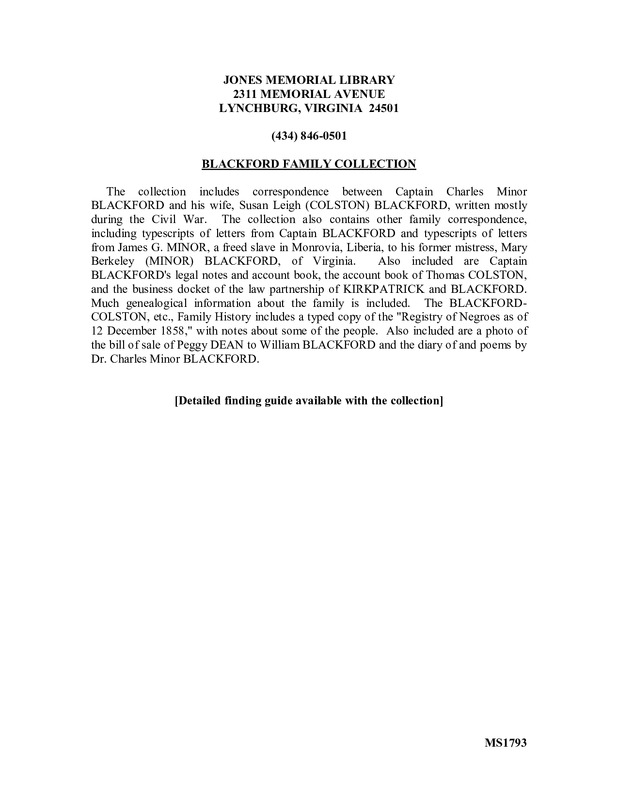
Blackford Family Collection Held At Jones Memorial Library In Lynchburg, Virginia. The Collection Includes Correspondence, Lists Of Enslaved Persons, A Letter From James G. Minor In Monrovia, Liberia, And Other Papers Related To The Blackford Family.
Parts of this collection have been digitized and are available under the Blackford Family Collection ITEM SET.
Digital images of pages from the Jones Memorial Library Manuscript Collection 1793: Blackford Family Collection, Box 1, Folder 3.
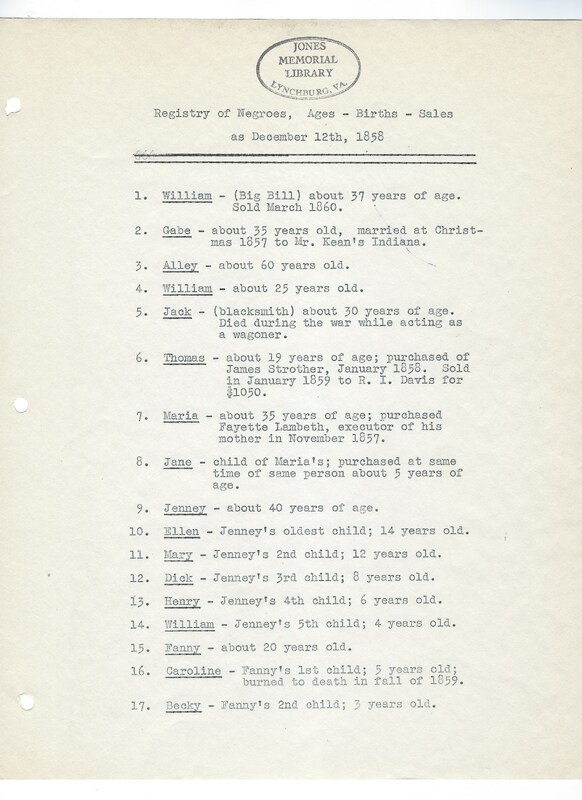
Digital scan of document entitled "Registry of Negroes, Ages-Births-Sales as December 12th, 1858". The two-page typewritten document is held at Jones Memorial Library in manuscript collection 1793, the Blackford Family Collection, in Box 1, Folder 2.
The document names and enumerates 21 enslaved persons from the Blackford estate in 1858. First names are listed; no surnames are listed.
Although the list is titled as of December 12, 1858, it includes the names of enslaved persons born and deceased after that point in time and therefore appears to be a list of persons enslaved by Blackford until their emancipation at the end of the Civil War.
Named enslaved persons include: William (Big Bill), Gabe, Alley, William, Jack, Thomas, Maria, Jane, Jenney, Ellen, Mary, Dick, Henry, William, Fanny, Caroline, Becky, Henry, Beverly, Caleb, and Charles.
Of the 21 enslaved persons on the list, three are named William (ages 37 years, 25 years, and 4 years) and two are named Henry (one aged 6 years and one born March 1858).
In addition to the names of the enslaved persons the list includes two typed notes, with one note mentioning a colt.
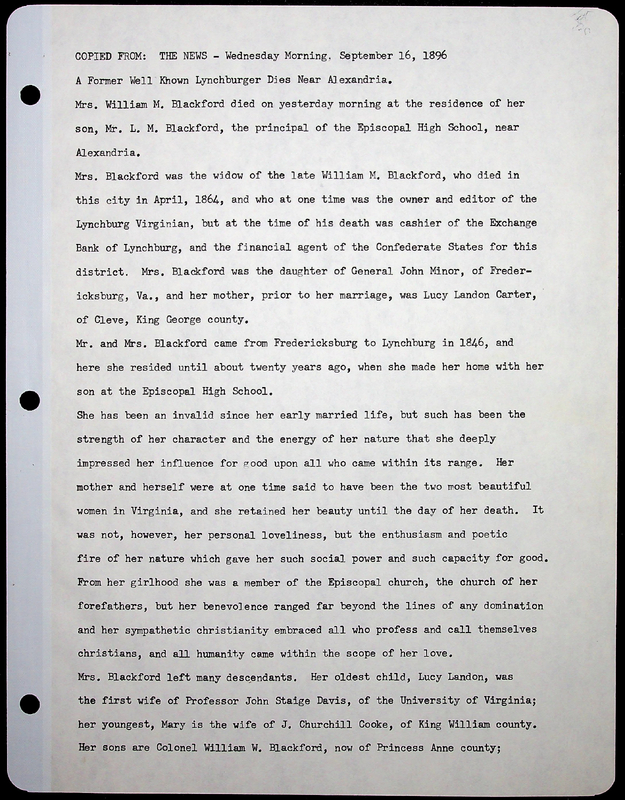
The materials in this folder include typed transcriptions and photostatic copies of newspaper obituaries and primarily photocopies of handwritten information entered in family bibles.
There is one handwritten two page list with names and birthdates of persons titled "Ages of Negro Children Belonging." The birthdates for these enslaved persons span from 1815 to 1836. It is presumed that these persons were enslaved by the Blackford family
Digital scan of document entitled "Registry of Negroes, Ages-Births-Sales as December 12th, 1858". The two-page typewritten document is held at Jones Memorial Library in manuscript collection 1793, the Blackford Family Collection, in Box 1, Folder 2.
The document names and enumerates 21 enslaved persons from the Blackford estate in 1858. First names are listed; no surnames are listed.
Although the list is titled as of December 12, 1858, it includes the names of enslaved persons born and deceased after that point in time and therefore appears to be a list of persons enslaved by Blackford until their emancipation at the end of the Civil War.
Named enslaved persons include: William (Big Bill), Gabe, Alley, William, Jack, Thomas, Maria, Jane, Jenney, Ellen, Mary, Dick, Henry, William, Fanny, Caroline, Becky, Henry, Beverly, Caleb, and Charles.
Of the 21 enslaved persons on the list, three are named William (ages 37 years, 25 years, and 4 years) and two are named Henry (one aged 6 years and one born March 1858).
In addition to the names of the enslaved persons the list includes two typed notes, with one note mentioning a colt.
Text of a lecture delivered to the Sphex Club in Lynchburg.
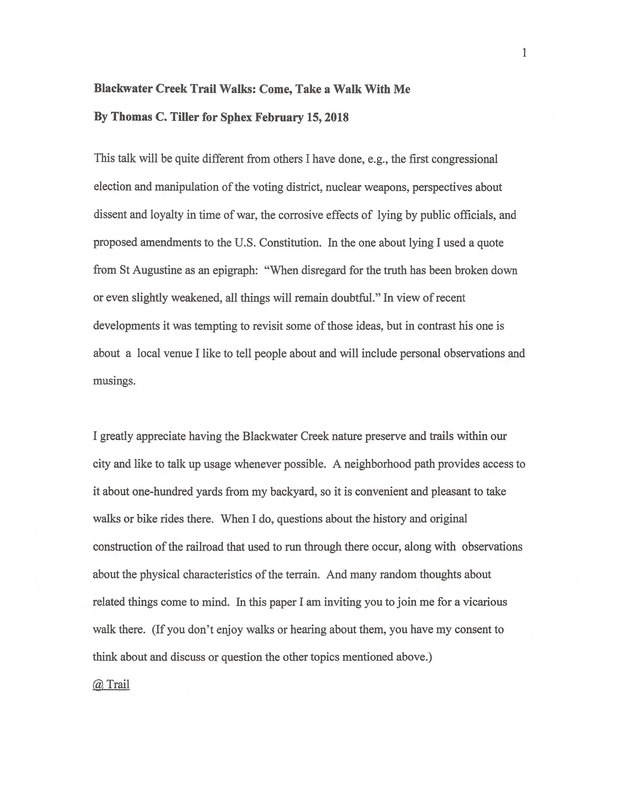
The paper "Blackwater Creek Trail Walks: Come, Take a Walk With Me" by Thomas C. Tiller describes Tiller's personal reflections and experiences while walking along the Blackwater Creek Trail. He contrasts this talk with his previous topics on political and social issues, focusing instead on the local natural beauty, history of the area including the Virginia and Tennessee Railroad, and personal observations. Tiller shares anecdotes about wildlife, the changing seasons, and the interconnectedness of the natural environment with personal memories and broader historical contexts.