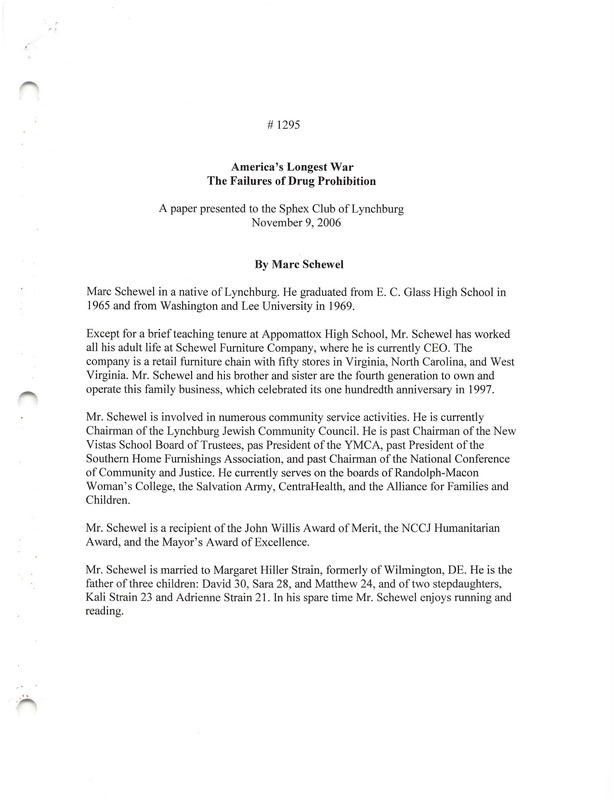
Text of a lecture delivered to the Sphex Club in Lynchburg. This academic paper delves into the extensive and costly failures of the United States' War on Drugs. Schewel critiques the war as wasteful, ineffective, and harmful, highlighting the negative societal impacts and flawed strategies behind drug prohibition. Specifically, the paper examines the history and regulation of marijuana, cocaine, and heroin in the U.S., outlines the prohibition's economic and social consequences, and questions the ethical basis of preventing adult drug use. Schewel utilizes anecdotes, historical legislation reviews, and quotes from Milton Friedman to argue against the prohibition's rationale and effectiveness.
James A. Huston’s presentation entitled “America’s Ten Most important Documents” is filled with fascinating facts, opinions and observations. Huston discusses why the “Northwest Ordinance” might be the most significant piece of legislation ever enacted by Congress, and the Fourteenth Amendment is “by far the most important of the amendments.” Huston concludes by pointing out that Thomas Jefferson had a major hand in the creation of the first seven of these ten documents.
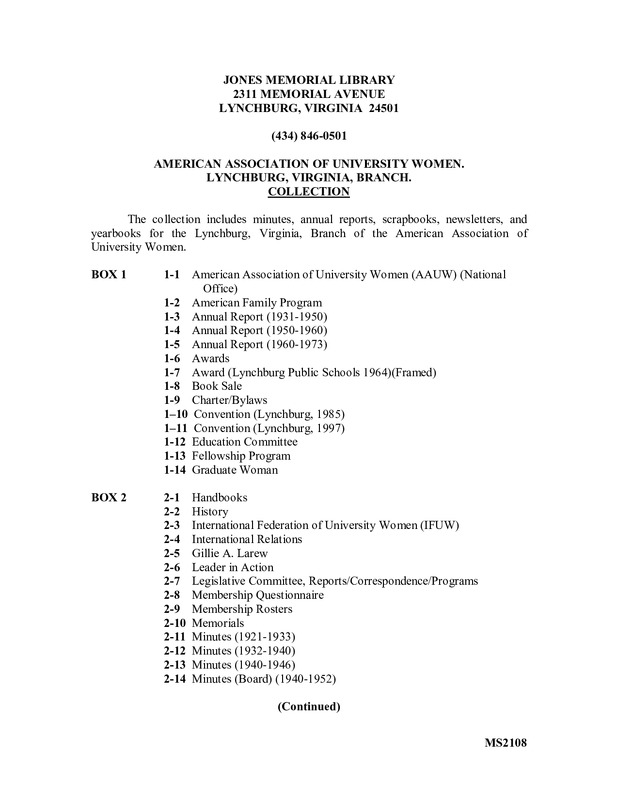
The collection includes minutes, annual reports, scrapbooks, newsletters, and
yearbooks for the Lynchburg, Virginia, Branch of the American Association of
University Women.