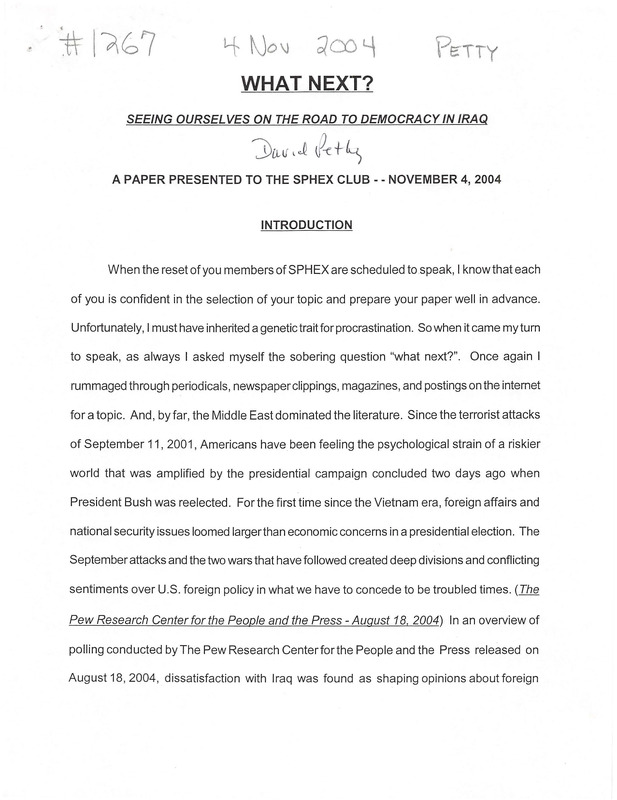
Text of a lecture delivered to the Sphex Club in Lynchburg. This paper by David T. Petty, Jr. discusses the complex scenario of U.S. foreign policy and governance in Iraq, focusing on the transition towards democracy post-Saddam Hussein's regime. It critically examines the U.S. administration's decisions, the role of external influences, and the challenges faced in establishing a democratic governance structure in Iraq, highlighting key issues such as the influence of religious and ethnic divisions, the impact of foreign intervention, and the prospects for future stability and democracy. The paper is structured to explore the historical context, the governance efforts by the U.S., the political landscape, and the ideological challenges, concluding with different viewpoints on the mission in Iraq and its implications for U.S. foreign policy.
John Mullen, a vice president of RJ Reynolds, explores the reasons for the Big Deal activity on Wall Street in the 1980s, culminating with the buyout of RJ Reynolds by KKR in 1988. He noted that two symbiotic factors contributed: junk bond financing and greed, both exemplified in the person of Michael Milken. The paper discusses Milken’s rise to power and its conjunction with changes in the securities industry and other sectors of finance.
The paper details a mission by U.S. environmental engineers to China in 1986, focusing on pollution control in water, wastewater treatment, and refuse. It highlights interactions with Chinese counterparts, visits to various industrial sites, and cultural experiences in China, emphasizing the interconnectedness and educational backgrounds of the participants.
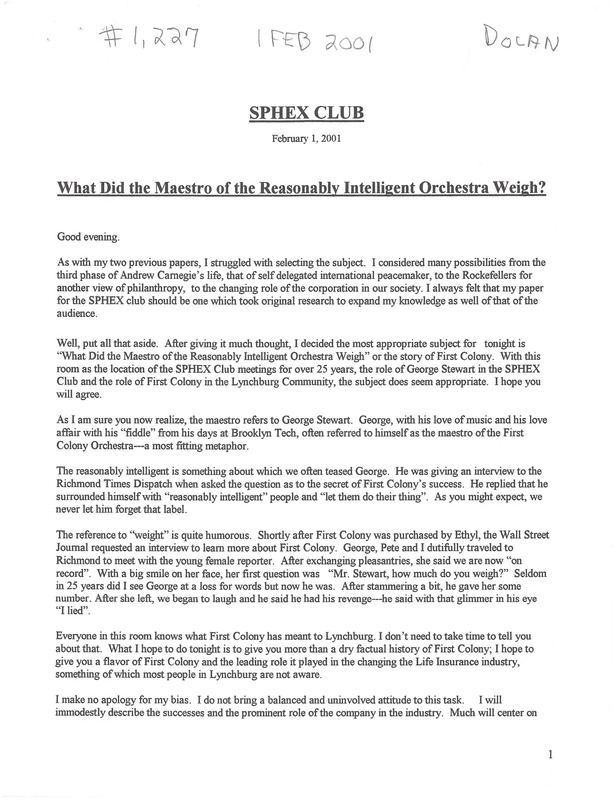
The paper discusses George Stewart's role in the history and success of First Colony Life Insurance Company. It details First Colony's founding, major milestones, innovative marketing strategies, product development, and its impact on the life insurance industry. The paper emphasizes Stewart's leadership, the company's growth, and its eventual acquisition by General Electric.
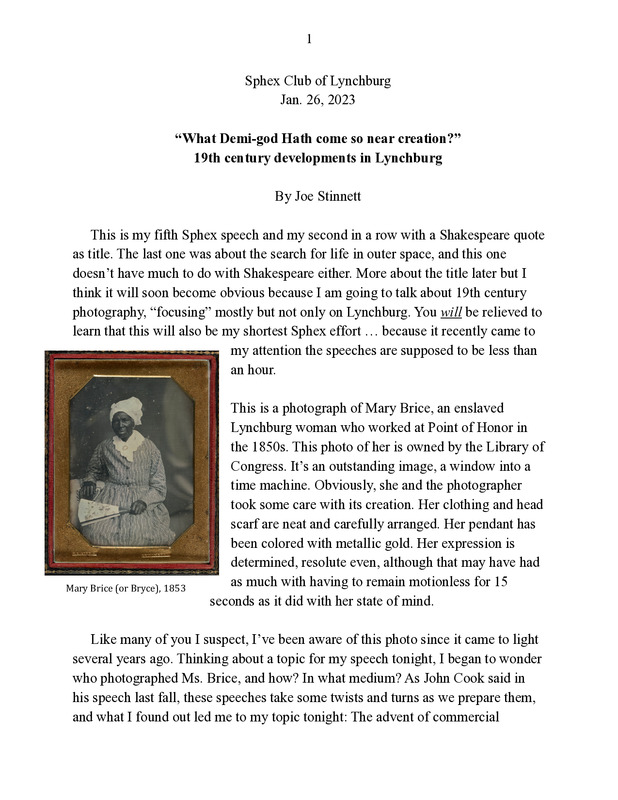
Text of a lecture delivered to the Sphex Club in Lynchburg. Joe Stinnett's Sphex Club talk, "What Demi-god Hath come so near creation?" explores 19th-century photography in Lynchburg, focusing on daguerreotypist Peter E. Gibbs. Stinnett discusses Gibbs' techniques, notable works including an image of enslaved woman Mary Brice, and the cultural impact of photography in that era. The paper highlights the technical and social aspects of early photography.
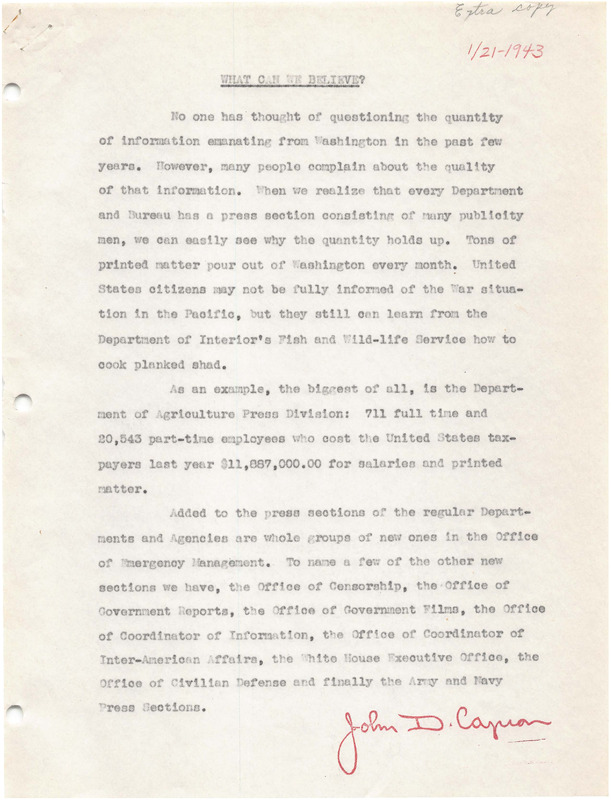
Text of a lecture to the Sphex Club of Lynchburg. The paper discusses the dissemination of erroneous and misleading information by government agencies during wartime, focusing on the issues arising from poor communication and the impact of censorship on public knowledge and morale. It examines specific instances where incorrect data led to significant consequences, highlighting the tension between maintaining national security and the public’s right to know. The organization of the paper explores the historical context, presents case studies, and critiques the systems responsible for information control and release.
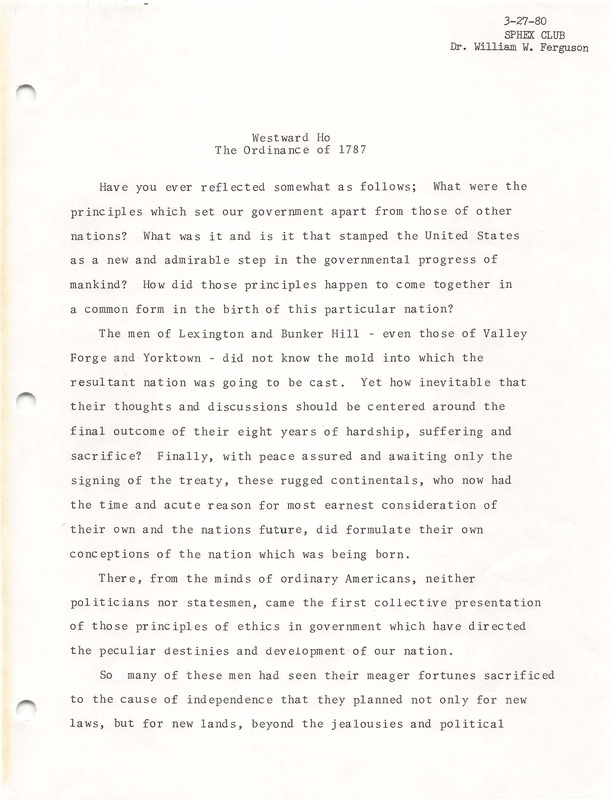
Dr. William W. Ferguson's lecture "Westward Ho" examines the principles behind the formation of the United States government, focusing on the Ordinance of 1787. The paper discusses the historical context, land policies, and governance structures that emerged post-Revolutionary War, emphasizing the significance of these developments in shaping American ideals and expansion.