The paper by Peter T. Marcy examines the realities of family life in the pre-industrial era, focusing on the 16th to 18th centuries. Marcy challenges the romanticized perceptions of this period, highlighting the harsh conditions, high infant mortality rates, and the impact of physiological factors on families and family size. Through historical evidence, he discusses the effects of nutrition, disease, sterility, and social practices on fertility and family structure, offering a comprehensive look at the demographic realities that contrast sharply with the idealized views of the past. The paper meticulously explores the determinants of family size, including marriage age, duration of marriage, birth intervals, and the physiological underpinnings of fertility, providing a nuanced understanding of historical family dynamics.
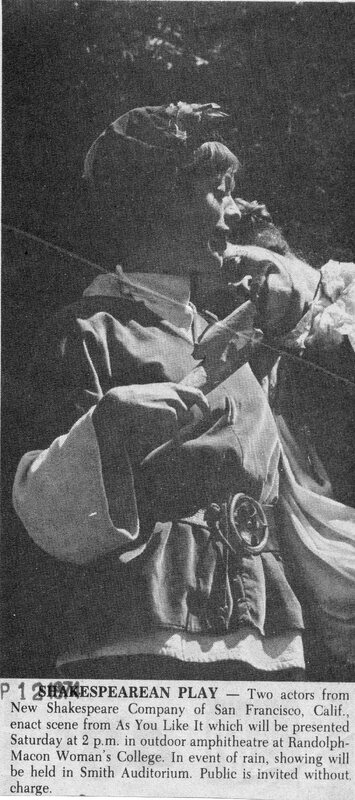
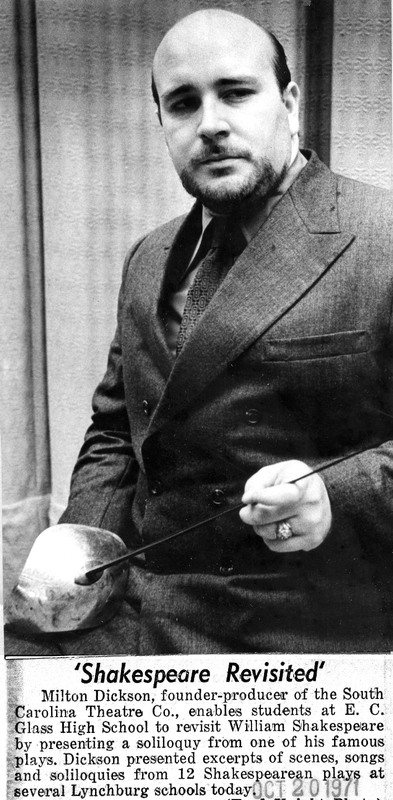
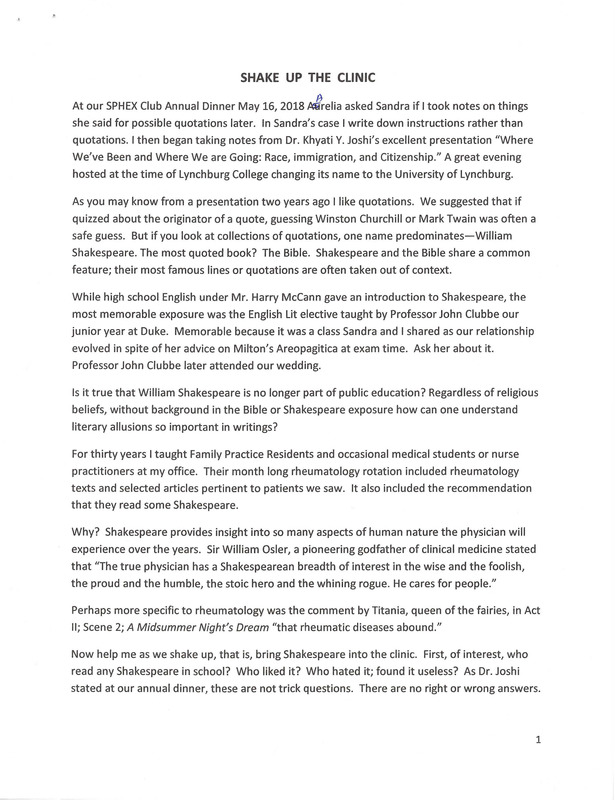
Text of a lecture to the Sphex Club in Lynchburg. The paper reflects on integrating Shakespearean quotes and themes into medical education, emphasizing their relevance in understanding human nature and enhancing patient care. The author draws parallels between Shakespeare's works and various aspects of medical practice, including diagnosis, patient interaction, and mental health. The presentation also touches on the role of literature in enriching professional and personal lives.
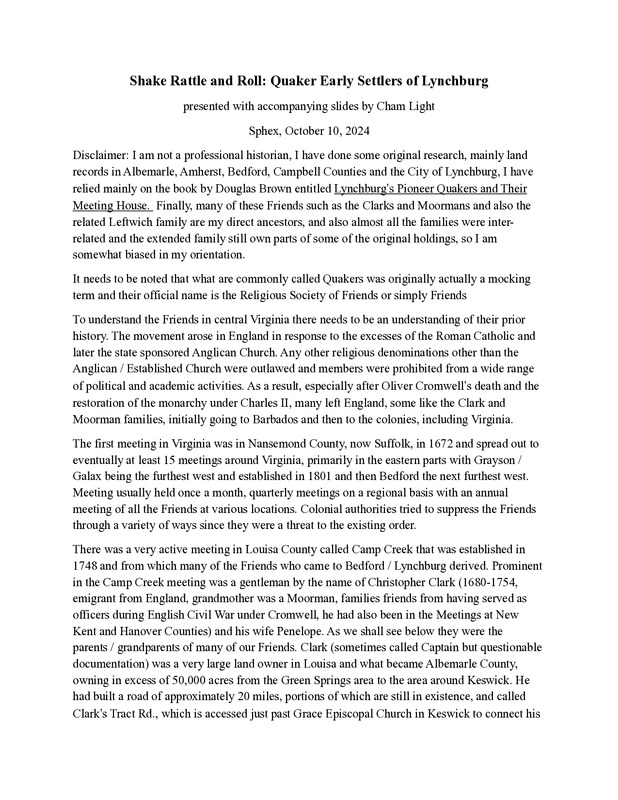
Text of a lecture delivered to the Sphex Club of Lynchburg, Va. by R. Chambliss Light, Jr. On October 10, 2024, Cham Light traced the early Quaker presence in Lynchburg through family genealogy and historical land records. The talk followed key families like the Clarks, Moormans, and Lynches, revealing their roles in founding South River Meeting and shaping regional development. Light emphasized religious convictions, internal divisions over slavery, and the migration of Friends westward as they grappled with evolving political and moral pressures.
The paper, "Shadows Larger Than ...reality" by E. Allen Culverhouse explores the complex dynamics of public employee unionism, grievance procedures, and employee-employer relations in Virginia during the 1970s and 1980s. The author analyzes legislative efforts aimed at both promoting and regulating public employee representation, with a specific focus on the formation of bargaining laws and grievance procedures. The paper discusses the legislative changes that attempted to make unions unnecessary by improving internal grievance mechanisms, and it highlights significant legislative sessions and proposals, examining their implications on public employee relations.