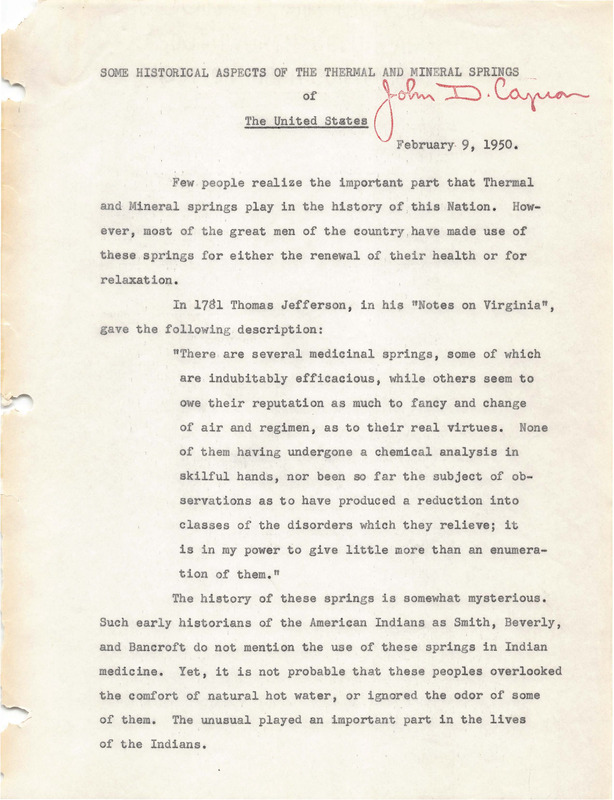
Text of a lecture to the Sphex Club in Lynchburg. The paper, titled "Some Historical Aspects of the Thermal and Mineral Springs of the United States," provides an exhaustive historical account of mineral springs in the U.S., emphasizing their importance in American history, health, and society from the colonial period through the 19th century. It details the various medicinal uses and social aspects of these springs, the people who frequented them, and their cultural significance, especially in Virginia. The study also highlights the evolution of public and medical perception of these springs over time.
The narrative traverses various themes, historical contexts, and interpretations related to Christian theology, iconography, and the cultural traditions surrounding Christmas and the new year, specifically in medieval and early modern Europe. It references academic interpretations, personal anecdotes, and detailed analyses of art and literature to explore these themes.
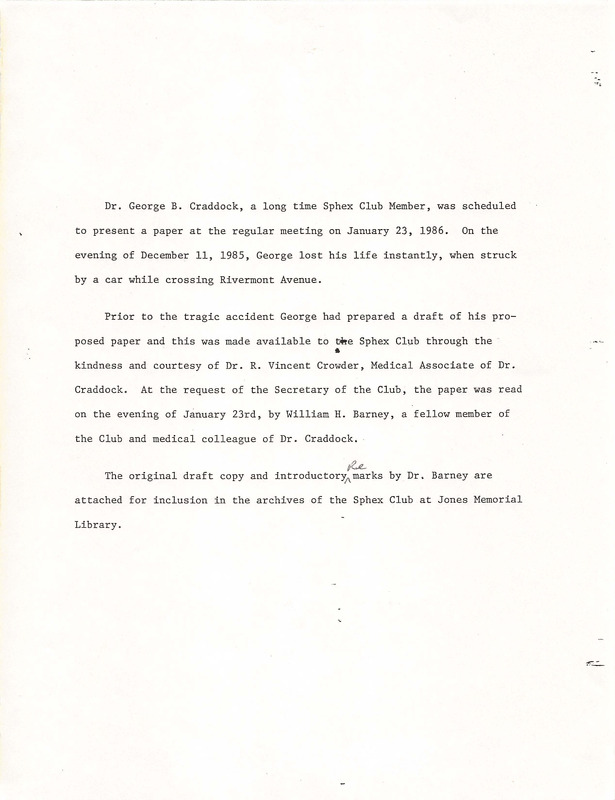
This paper, presented posthumously by Dr. George B. Craddock at a Sphex Club meeting, provides an in-depth examination of the medical and social aspects of the Gypsy community in the United States, focusing particularly on their health practices, cultural norms, and interactions with the medical system. Dr. Craddock's paper, relying heavily on the work of Dr. James D. Thomas and other anecdotal evidence, offers a unique insight into the often nomadic and insular Gypsy community, highlighting their strong cultural coherence, traditional practices, and the challenges they face in integrating with mainstream medical services.
Digitized copy of a pamphlet published in 1921 entitled "Some Books and Pamphlets, Music, Magazines and Newspapers by Negro Writers, Composers and Editors in the Colored Department of the Louisville Free Public Library".
This document is part of Jones Memorial Library Manuscript Collection 1396, the Dunbar High School Library Papers. The item is held in printed format at Jones Memorial Library.