Dr. John T. T. Hundley's paper, titled "The Poverty Problem," explores the global and national issues of poverty, emphasizing the insensitivity of the wealthy to the needs of the underprivileged. It critiques the federal Poverty Program's execution, citing mismanagement and insufficient planning, particularly in Laredo, Texas. The paper also addresses broader causes of poverty, such as the economic challenges facing small farmers and migration to urban slums, proposing a comprehensive national program to combat these issues. It concludes with the author's philosophical perspective on addressing poverty, highlighting the importance of motivation over mere financial aid.
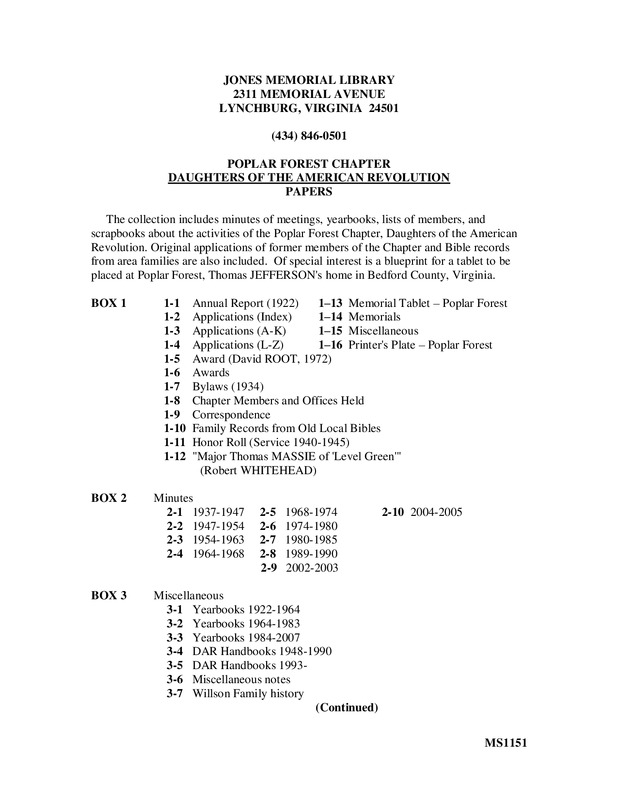
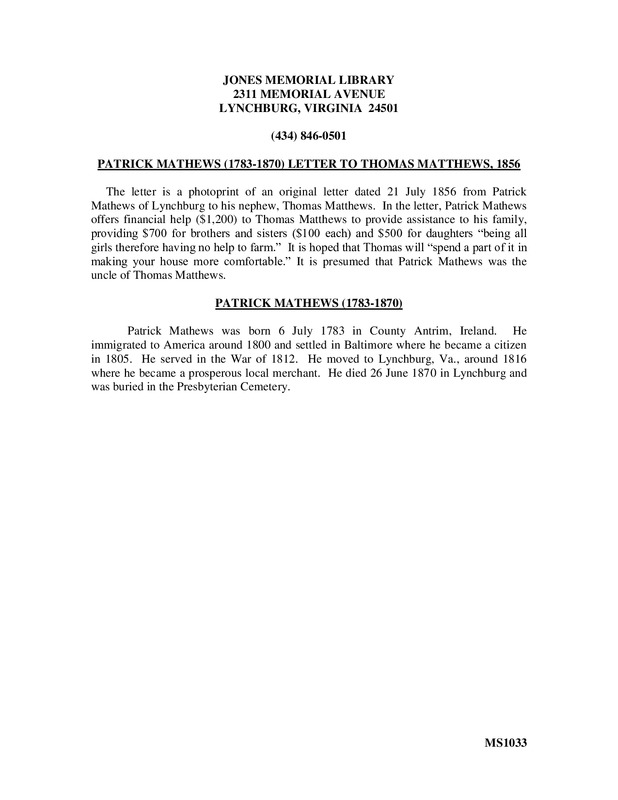
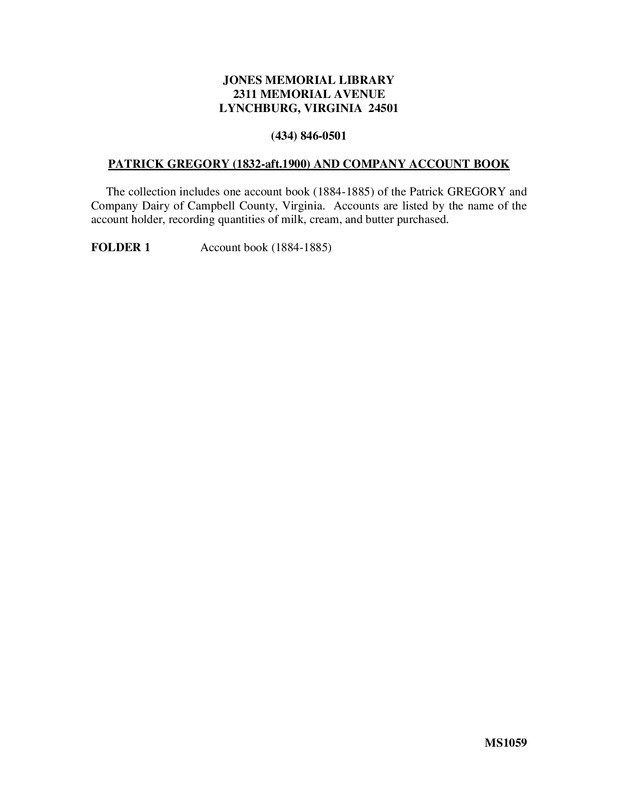
Poplar Forest Chapter Daughters Of The American Revolution Papers Held At Jones Memorial Library In Lynchburg, Virginia. The Papers Include Minutes, Yearbooks, Lists, Scrapbooks, And Bible Records.
The Points of Osler's Compass by Carroll H. Lippard is a reflective and instructive exploration of William Osler's profound impact on medicine, focusing on his ethical, educational, and personal principles. Lippard discusses Osler's dedication to the physician-patient relationship, continuous medical education, and the balance of professional and personal life, advocating for these values in modern medical practice. The paper underscores Osler's humanistic approach to medicine, emphasizing the importance of compassion, lifelong learning, and ethical practice for contemporary physicians.
Dr. Thomas Moody Campbell's paper "The Poetry of Shelley" presents a detailed analysis of Percy Bysshe Shelley's lyric poetry through motif analysis. Focusing on the integration of experience and expression, Campbell explores Shelley's themes of liberty, life, and the intertwining of nature and spirituality. He highlights the uniqueness of Shelley's poetic motifs, emphasizing the poet's passionate disdain for tyranny and his identification with nature, using examples like "Ode to the West Wind" and "Mont Blanc" to illustrate Shelley's method of embodying philosophical and emotional depth within his work.
James D. Paxton's "The Philosophy of Allowance" humorously proposes a life philosophy focused on moderation rather than strict avoidance, as traditionally dictated by societal and religious norms. Paxton critiques the prohibitive nature of historical codes like the Ten Commandments and the Code of Hammurabi, suggesting a daily "allowance" for minor transgressions such as a cuss word, a kick, and even a lie, arguing this method may lead to greater overall adherence to good behavior. By allowing ourselves a controlled indulgence in these small vices, Paxton theorizes we may actually find it easier to live virtuously, injecting a fresh zest into daily life while maintaining a balance between restriction and freedom.
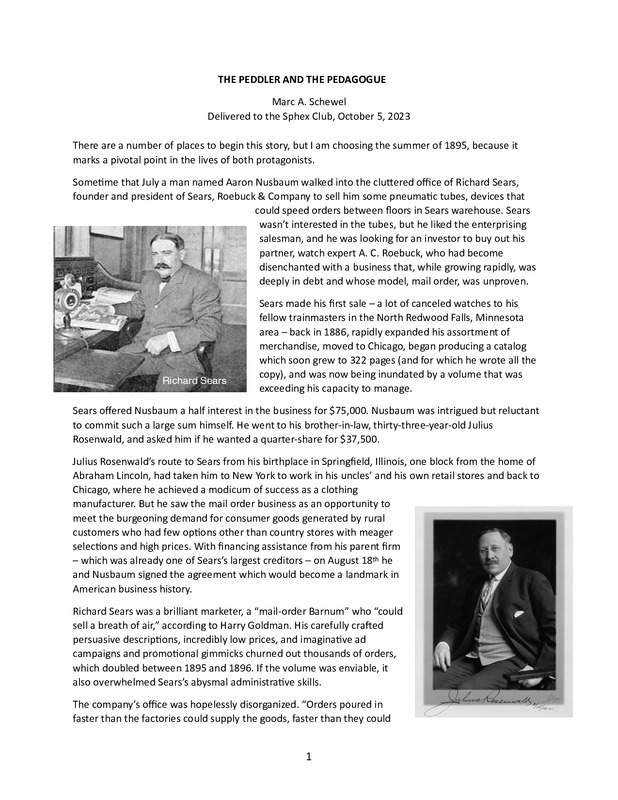
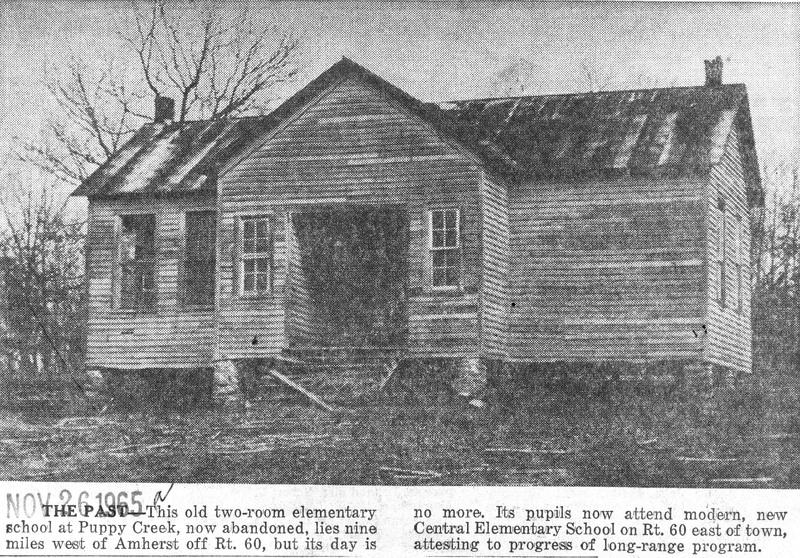
Text of a lecture delivered to the Sphex Club in Lynchburg. This academic paper outlines the historical partnership between Julius Rosenwald and Booker T. Washington, focusing on their work to improve African American education in the early 20th century. It details how Rosenwald, influenced by his philanthropic ethos and Washington's educational vision, funded the construction of thousands of schools for black children in the South. The paper discusses the architecture and community impact of these "Rosenwald Schools," highlighting their significance in the context of segregation and the fight for equality. It also touches on the eventual decline of these schools with desegregation but notes their legacy and efforts to preserve them as important cultural and historical sites. Schewel reported on efforts to restore and repurpose the Campbell County Training School Assembly Building in Rustburg, a former Rosenwald School.
Judge Norman K. Moon began his presentation by saying "James C. McReynolds is commonly judged one of the worst Justices ever to have sat on the United States Supreme Court." Moon then explains why McReynolds possibly “turned out to be the most conservative justice ever to serve on the court.” Moon describes the intriguing personality and prejudices of McReynolds.
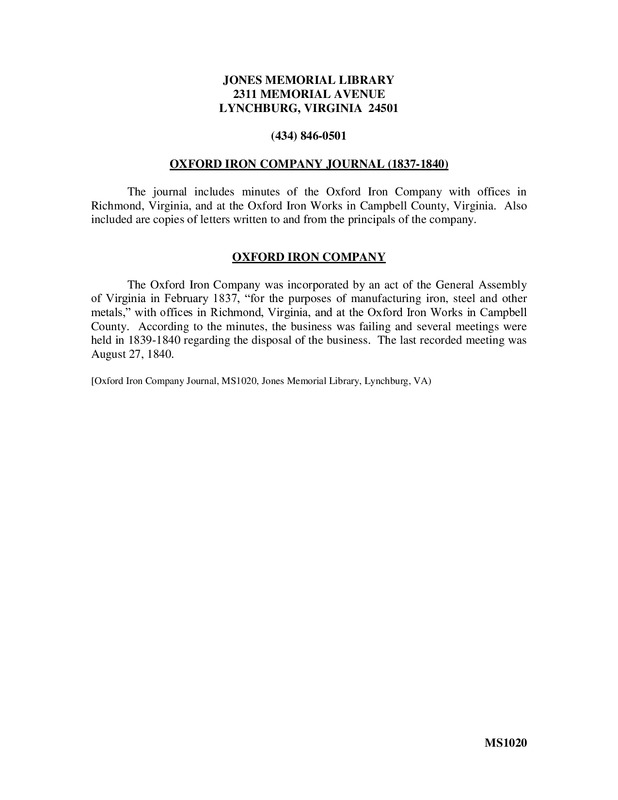
Oxford Iron Company Journal (1837-1840)
The Journal Includes Minutes Of The Oxford Iron Company With Offices In Richmond, Virginia, And At The Oxford Iron Works In Campbell County, Virginia. Also Included Are Copies Of Letters Written To And From The Principals Of The Company.
Oxford Iron Company
The Oxford Iron Company Was Incorporated By An Act Of The General Assembly Of Virginia In February 1837, “For The Purposes Of Manufacturing Iron, Steel And Other Metals,” With Offices In Richmond, Virginia, And At The Oxford Iron Works In Campbell County. According To The Minutes, The Business Was Failing And Several Meetings Were Held In 1839-1840 Regarding The Disposal Of The Business. The Last Recorded Meeting Was August 27, 1840.
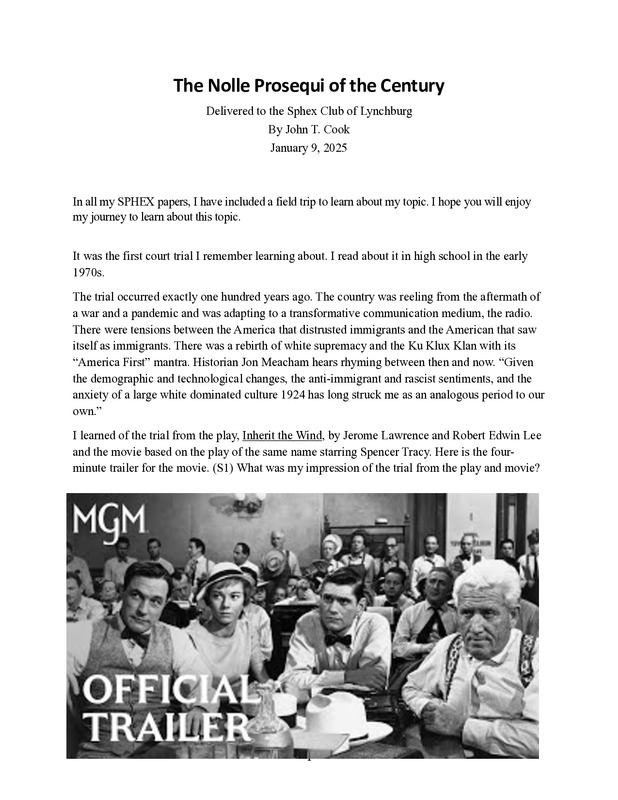
On January 9, 2025, John T. Cook revisited the Scopes Monkey Trial, contrasting its dramatic portrayal in *Inherit the Wind* with historical records. Drawing from courtroom transcripts, reenactments, and legal scholarship, Cook explored the trial’s cultural and constitutional implications, exposing its myths and ongoing relevance to debates about science, education, and religious freedom in America.