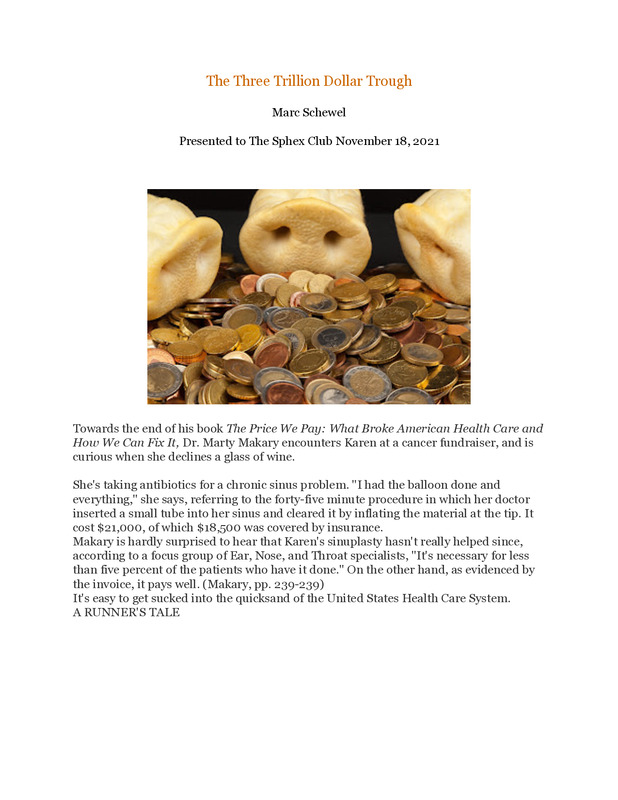
Text of a lecture delivered to the Sphex Club in Lynchburg. Marc Schewel's presentation examined the inefficiencies and high costs of the U.S. healthcare system, which spent approximately $3.65 trillion in 2018. He highlighted the discrepancies between this high expenditure and the poorer health outcomes in the U.S. compared to other high-income countries, scrutinizing various sectors of the healthcare industry, including hospitals, pharmaceutical companies, and insurance providers, for their role in inflating costs.
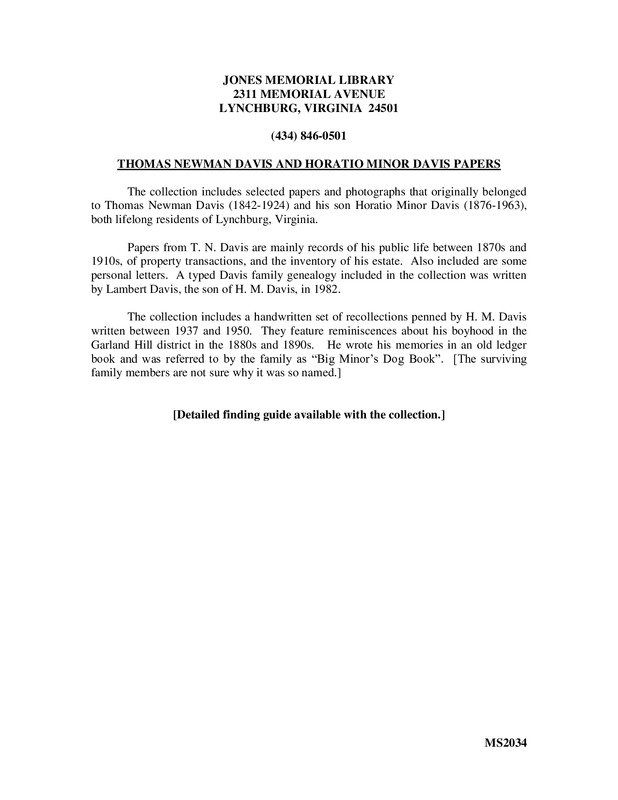
Thomas Newman Davis And Horatio Minor Davis Papers Held At Jones Memorial Library In Lynchburg, Virginia.
The Papers Include Photographs, Letters, Records, And Recollections.
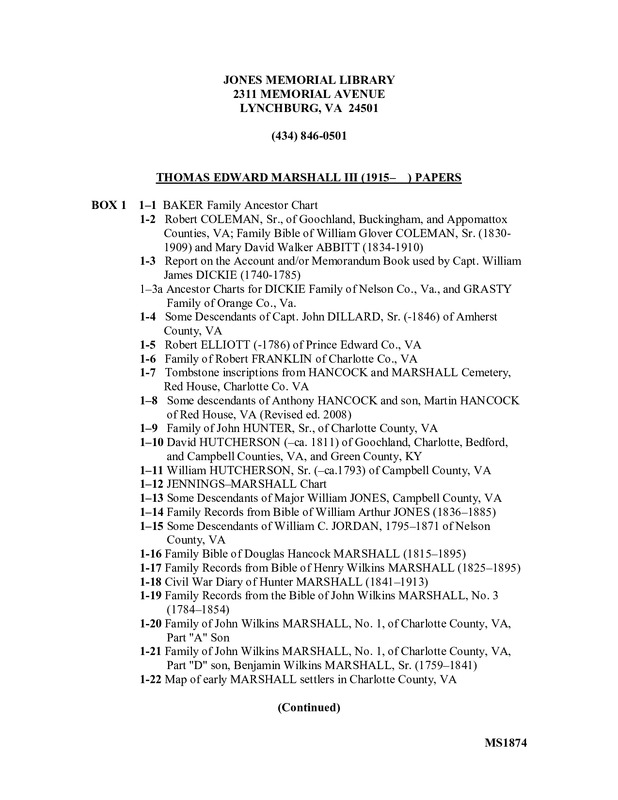
Thomas Edward Marshall, IIIg Papers held at Jones Memorial Library in Lynchburg, Virginia. The Papers include genealogical research, maps, books, and diaries.
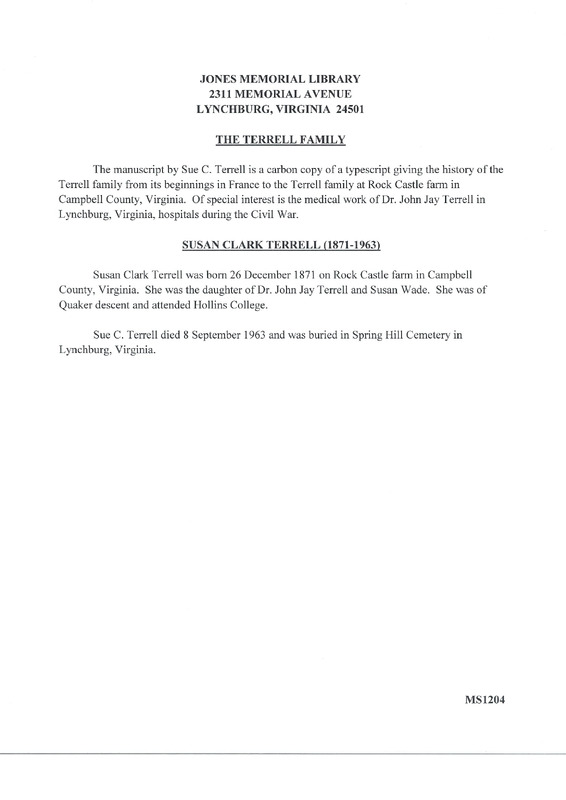
Copy of a typescript about the history of the Terrell family from Rock Castle farm in Campbell County, Virginia. Includes notes on the medical work of Dr. John Jay Terrell during the American Civil War at Lynchburg area hospitals.
When the Webster’s Third Dictionary arrived in 1961, it set off a tempest of anger, condemnation and rejection. Many highly respected people said, “Take Webster’s Third out of print.” This fascinating paper explores many of the changes from Webster’s Second dictionary that were condemned. After discussing the changing nature of language and accepting some of the critics’ points as reasonable to consider, Dr. John Turner concludes by sharing his reasons for endorsing Webster's Third Dictionary.
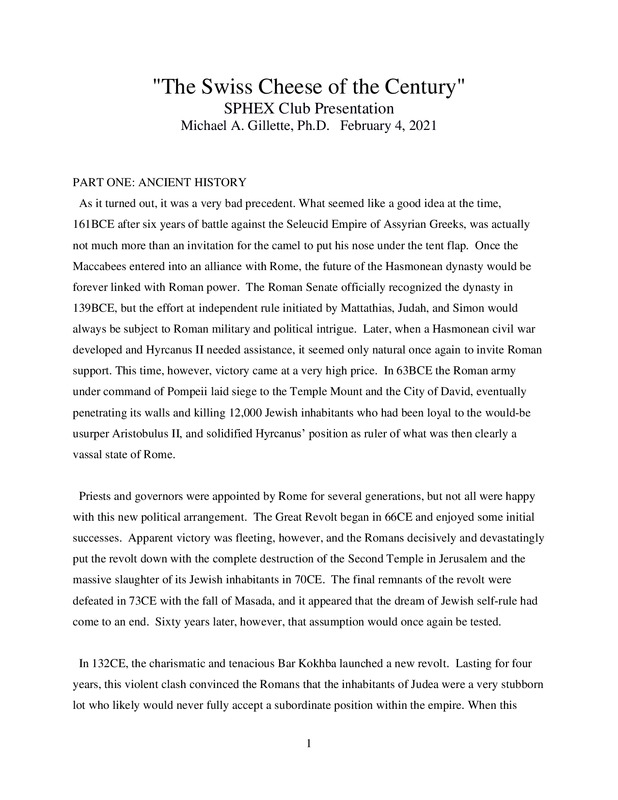
Text of a lecture delivered for the Sphex Club of Lynchburg, Va. A summary of the history and current status of Israel and the Palestinian people and proposed solutions to the current social and political stalemate between Israel and the Palestinian people.
Thomas Ledford's paper discusses the end of the James River and Kanawha Canal and how it was transformed into a steam railroad right of way that operates today as the CSX Corporation. During Washington and Jefferson’s era the need for western expansion to improve the economy became evident. The two giants of that era were canals and railroads. Ledford explains why the canals eventually lost the “struggle between giants.”
This paper presents a comprehensive history of civil engineering, detailing the evolution of engineering principles from ancient times to the modern era. It covers significant developments like irrigation in Mesopotamia and Egypt, Roman aqueducts and roads, medieval bridges, and modern advancements in structural materials and designs. The paper emphasizes the role of civil engineering in shaping public infrastructure, transportation, and public health systems, highlighting the pivotal role of material science in these advancements.
This paper by Cranston Williams details the history and development of Southern Pine newsprint, beginning with its origins and significant milestones. It covers the establishment of mills, the impact on the newspaper industry, and the economic implications for the Southern United States. Key historical figures and events, such as the first Southern Pine mill at Lufkin and the involvement of Dr. Charles H. Herty, are highlighted.
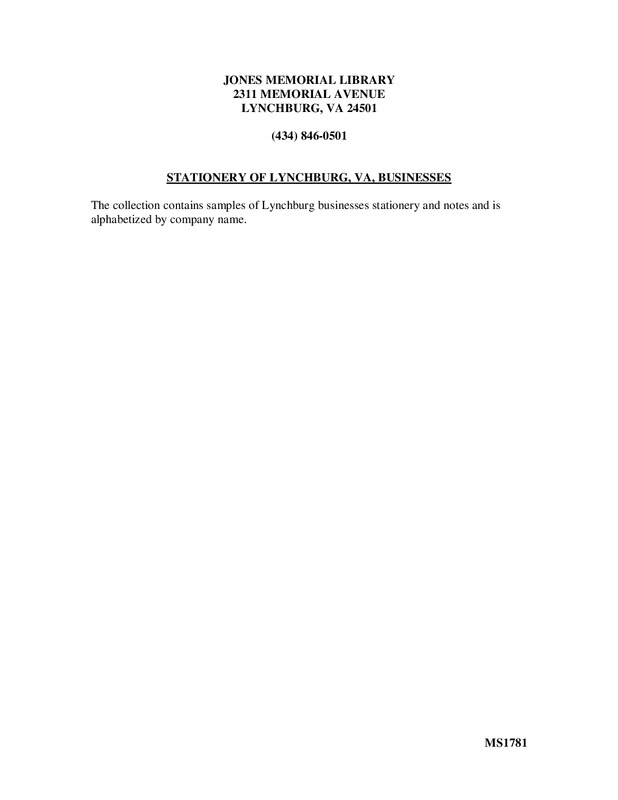
Stationery Of Lynchburg, Va Businesses Held At Jones Memorial Library In Lynchburg. The Collection Include Sample Sheets Of Stationery For Area Businesses.
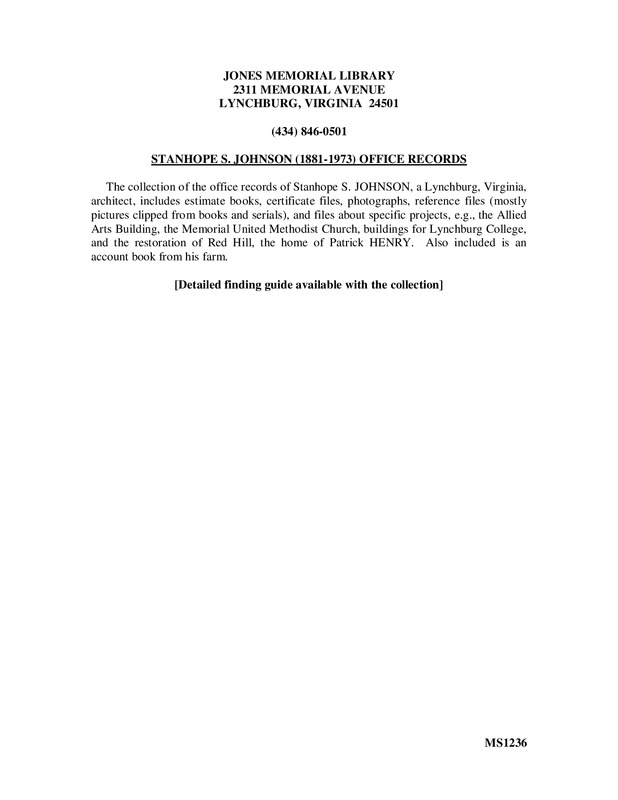
Stanhope S. Johnson Office Records Held At Jones Memorial Library In Lynchburg, Virginia. Stanhope Johnson Was An Architect And The Files Include Estimate Books, Certificate Files, Photographs, Project Files And An Account Book From Johnson'S Farm.
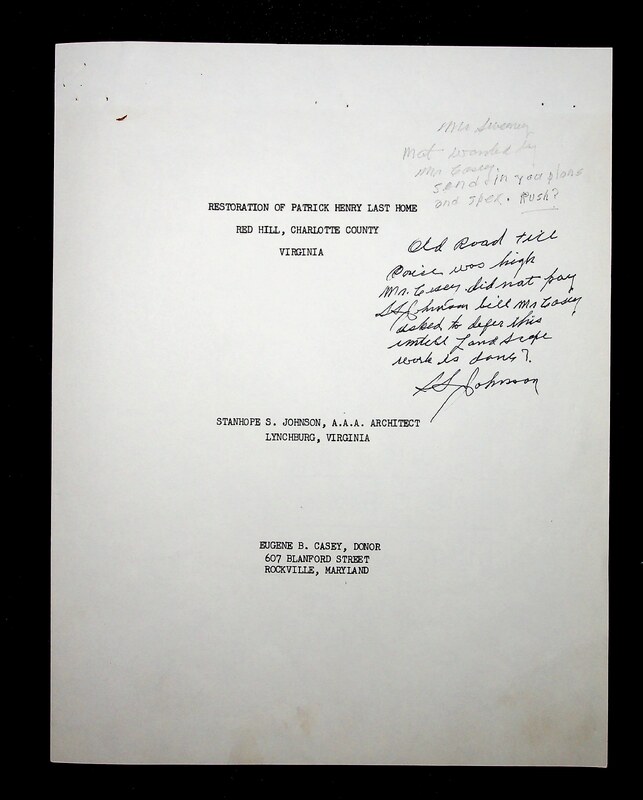
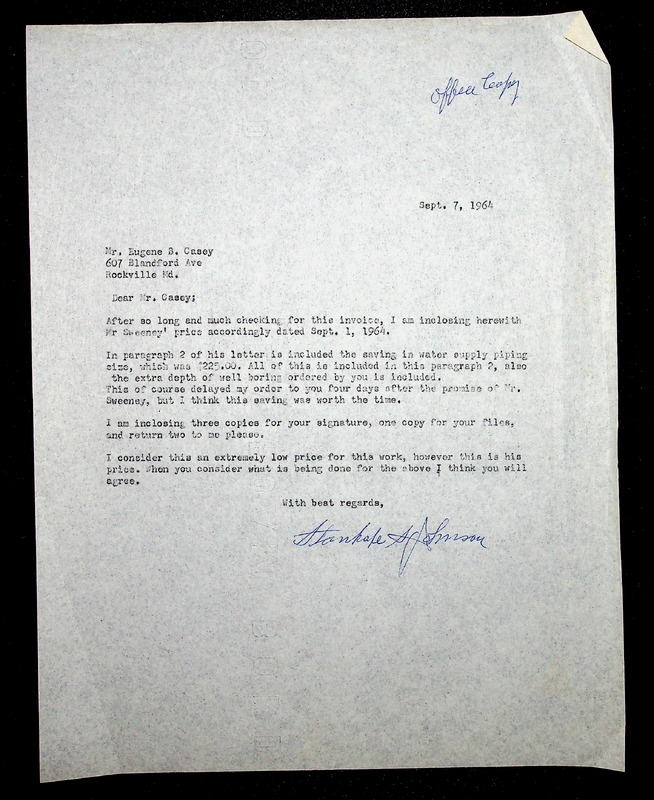
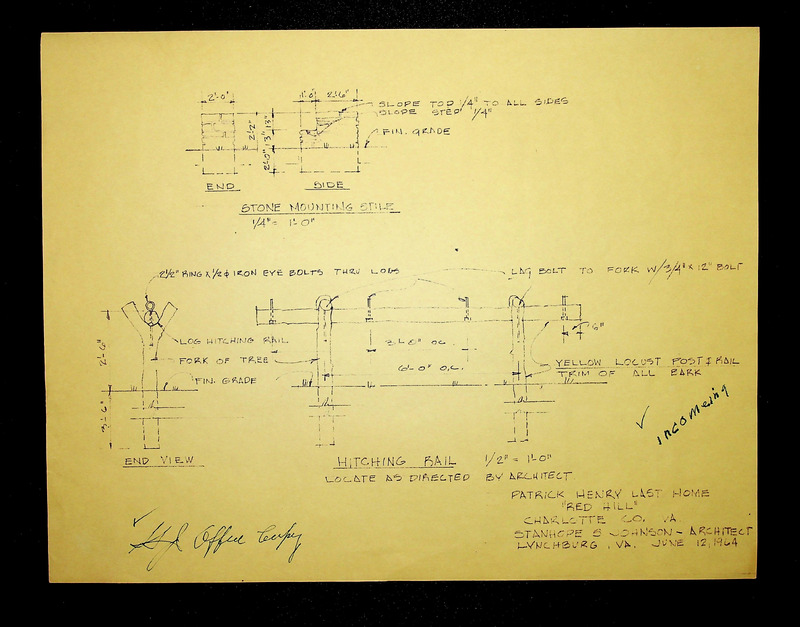
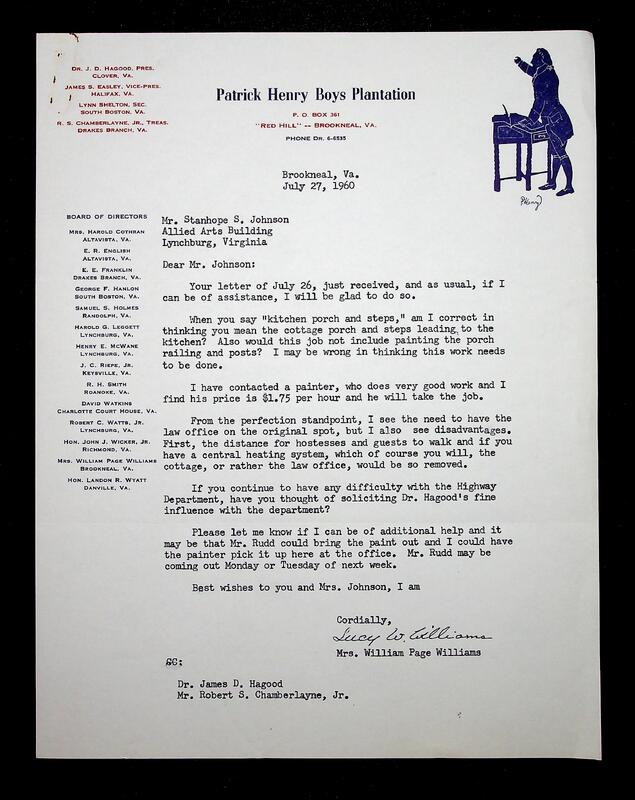
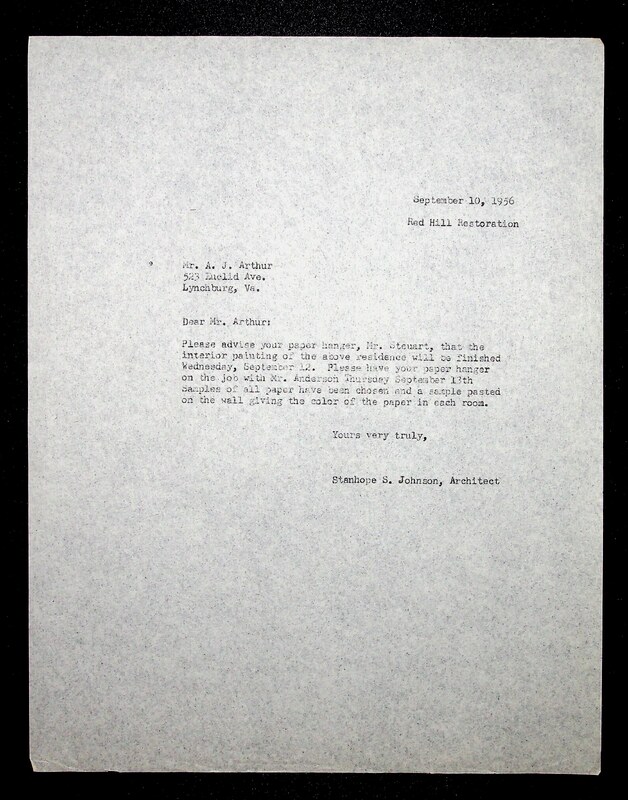
Scanned images of papers from the Stanhope S. Johnson Office Records collection (JML Manuscript 1236). These papers are from Folder 4, Box 17 of the collection and pertain to the restoration of Patrick Henry's Red Hill Plantation and adjacent properties.
STANHOPE S. JOHNSON was born 16 February 1881 in Lynchburg, Virginia. He attended the Piedmont Business College in Lynchburg and the Scranton School of Architecture in Pennsylvania, where he received a diploma in 1906. He then attended the deHOULTLIEU School of Architecture in Paris in 1912 and took architectural business courses "in the Atelier of H.C.L. SMITH," of London. JOHNSON also traveled throughout Europe studying types of architecture. In 1910 JOHNSON opened architectural offices in Lynchburg and Danville, Virginia and "specialized in classical and colonial architectural design as applied to churches, schools, hotels and residences in Virginia" and throughout the South. A member of the American Institute of Architects, JOHNSON served on the Virginia State Board for the examination of architects, engineers, and land surveyors. Among his noteworthy accomplishments were the preservation and restoration of the MILLER-CLAYTOR House in Lynchburg, and the restoration of Red Hill, the home of Patrick HENRY. He also designed buildings for Randolph-Macon Woman's College and Lynchburg College. JOHNSON died 11 January 1973 in Lynchburg and was buried in the Spring Hill Cemetery in Lynchburg.
Scanned images of papers from the Stanhope S. Johnson Office Records collection (JML Manuscript 1236). These papers are from Folder 1 Box 17 of the collection and pertain to the restoration of Patrick Henry's Red Hill Plantation and adjacent properties.
STANHOPE S. JOHNSON was born 16 February 1881 in Lynchburg, Virginia. He attended the Piedmont Business College in Lynchburg and the Scranton School of Architecture in Pennsylvania, where he received a diploma in 1906. He then attended the deHOULTLIEU School of Architecture in Paris in 1912 and took architectural business courses "in the Atelier of H.C.L. SMITH," of London. JOHNSON also traveled throughout Europe studying types of architecture. In 1910 JOHNSON opened architectural offices in Lynchburg and Danville, Virginia and "specialized in classical and colonial architectural design as applied to churches, schools, hotels and residences in Virginia" and throughout the South. A member of the American Institute of Architects, JOHNSON served on the Virginia State Board for the examination of architects, engineers, and land surveyors. Among his noteworthy accomplishments were the preservation and restoration of the MILLER-CLAYTOR House in Lynchburg, and the restoration of Red Hill, the home of Patrick HENRY. He also designed buildings for Randolph-Macon Woman's College and Lynchburg College. JOHNSON died 11 January 1973 in Lynchburg and was buried in the Spring Hill Cemetery in Lynchburg.
Scanned images of papers from the Stanhope S. Johnson Office Records collection (JML Manuscript 1236). These papers are from Folder 9, Box 17 of the collection and pertain to the restoration of Patrick Henry's Red Hill Plantation and adjacent properties.
STANHOPE S. JOHNSON was born 16 February 1881 in Lynchburg, Virginia. He attended the Piedmont Business College in Lynchburg and the Scranton School of Architecture in Pennsylvania, where he received a diploma in 1906. He then attended the deHOULTLIEU School of Architecture in Paris in 1912 and took architectural business courses "in the Atelier of H.C.L. SMITH," of London. JOHNSON also traveled throughout Europe studying types of architecture. In 1910 JOHNSON opened architectural offices in Lynchburg and Danville, Virginia and "specialized in classical and colonial architectural design as applied to churches, schools, hotels and residences in Virginia" and throughout the South. A member of the American Institute of Architects, JOHNSON served on the Virginia State Board for the examination of architects, engineers, and land surveyors. Among his noteworthy accomplishments were the preservation and restoration of the MILLER-CLAYTOR House in Lynchburg, and the restoration of Red Hill, the home of Patrick HENRY. He also designed buildings for Randolph-Macon Woman's College and Lynchburg College. JOHNSON died 11 January 1973 in Lynchburg and was buried in the Spring Hill Cemetery in Lynchburg.
Scanned images of papers from the Stanhope S. Johnson Office Records collection (JML Manuscript 1236). These papers are from Folder 8, Box 17 of the collection and pertain to the restoration of Patrick Henry's Red Hill Plantation and adjacent properties.
STANHOPE S. JOHNSON was born 16 February 1881 in Lynchburg, Virginia. He attended the Piedmont Business College in Lynchburg and the Scranton School of Architecture in Pennsylvania, where he received a diploma in 1906. He then attended the deHOULTLIEU School of Architecture in Paris in 1912 and took architectural business courses "in the Atelier of H.C.L. SMITH," of London. JOHNSON also traveled throughout Europe studying types of architecture. In 1910 JOHNSON opened architectural offices in Lynchburg and Danville, Virginia and "specialized in classical and colonial architectural design as applied to churches, schools, hotels and residences in Virginia" and throughout the South. A member of the American Institute of Architects, JOHNSON served on the Virginia State Board for the examination of architects, engineers, and land surveyors. Among his noteworthy accomplishments were the preservation and restoration of the MILLER-CLAYTOR House in Lynchburg, and the restoration of Red Hill, the home of Patrick HENRY. He also designed buildings for Randolph-Macon Woman's College and Lynchburg College. JOHNSON died 11 January 1973 in Lynchburg and was buried in the Spring Hill Cemetery in Lynchburg.
Scanned images of papers from the Stanhope S. Johnson Office Records collection (JML Manuscript 1236). These papers are from Folder 7, Box 17 of the collection and pertain to the restoration of Patrick Henry's Red Hill Plantation and adjacent properties.
STANHOPE S. JOHNSON was born 16 February 1881 in Lynchburg, Virginia. He attended the Piedmont Business College in Lynchburg and the Scranton School of Architecture in Pennsylvania, where he received a diploma in 1906. He then attended the deHOULTLIEU School of Architecture in Paris in 1912 and took architectural business courses "in the Atelier of H.C.L. SMITH," of London. JOHNSON also traveled throughout Europe studying types of architecture. In 1910 JOHNSON opened architectural offices in Lynchburg and Danville, Virginia and "specialized in classical and colonial architectural design as applied to churches, schools, hotels and residences in Virginia" and throughout the South. A member of the American Institute of Architects, JOHNSON served on the Virginia State Board for the examination of architects, engineers, and land surveyors. Among his noteworthy accomplishments were the preservation and restoration of the MILLER-CLAYTOR House in Lynchburg, and the restoration of Red Hill, the home of Patrick HENRY. He also designed buildings for Randolph-Macon Woman's College and Lynchburg College. JOHNSON died 11 January 1973 in Lynchburg and was buried in the Spring Hill Cemetery in Lynchburg.
Scanned images of papers from the Stanhope S. Johnson Office Records collection (JML Manuscript 1236). These papers are from Folder 6, Box 17 of the collection and pertain to the restoration of Patrick Henry's Red Hill Plantation and adjacent properties.
STANHOPE S. JOHNSON was born 16 February 1881 in Lynchburg, Virginia. He attended the Piedmont Business College in Lynchburg and the Scranton School of Architecture in Pennsylvania, where he received a diploma in 1906. He then attended the deHOULTLIEU School of Architecture in Paris in 1912 and took architectural business courses "in the Atelier of H.C.L. SMITH," of London. JOHNSON also traveled throughout Europe studying types of architecture. In 1910 JOHNSON opened architectural offices in Lynchburg and Danville, Virginia and "specialized in classical and colonial architectural design as applied to churches, schools, hotels and residences in Virginia" and throughout the South. A member of the American Institute of Architects, JOHNSON served on the Virginia State Board for the examination of architects, engineers, and land surveyors. Among his noteworthy accomplishments were the preservation and restoration of the MILLER-CLAYTOR House in Lynchburg, and the restoration of Red Hill, the home of Patrick HENRY. He also designed buildings for Randolph-Macon Woman's College and Lynchburg College. JOHNSON died 11 January 1973 in Lynchburg and was buried in the Spring Hill Cemetery in Lynchburg.