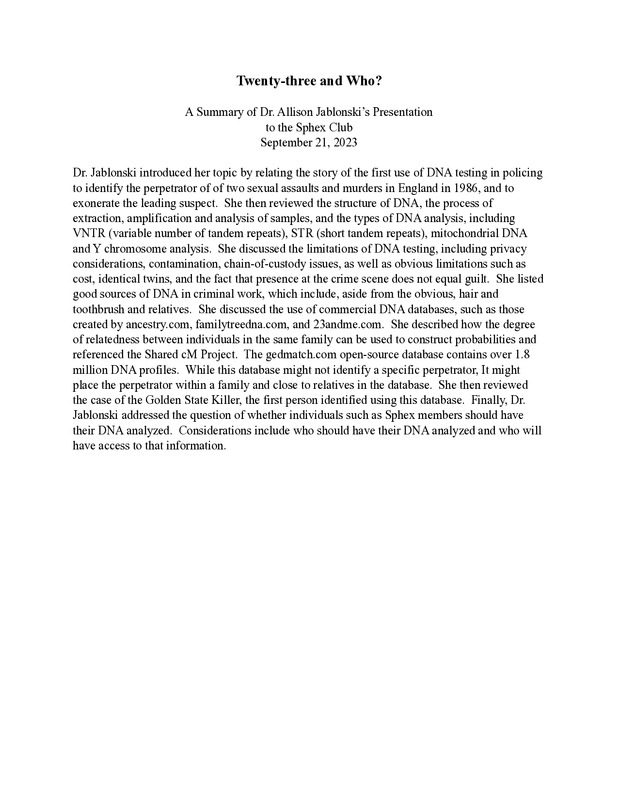
Text of a lecture to the Sphex Club of Lynchburg. In her presentation "Twenty-three and Who?", Dr. Allison Jablonski delved into the evolution and significance of DNA testing in criminal investigations, starting with its first use in 1986 in England to solve sexual assaults and murders. She covered the technical aspects of DNA analysis, including various methods like VNTR and STR, and discussed challenges such as privacy concerns, potential contamination, and the limitations of DNA presence at crime scenes. Dr. Jablonski also explored the role of commercial DNA databases in aiding criminal investigations, exemplified by the case of the Golden State Killer, and concluded with a discussion on the personal and ethical considerations of individuals, like Sphex Club members, having their DNA analyzed, emphasizing the implications of privacy and data access.
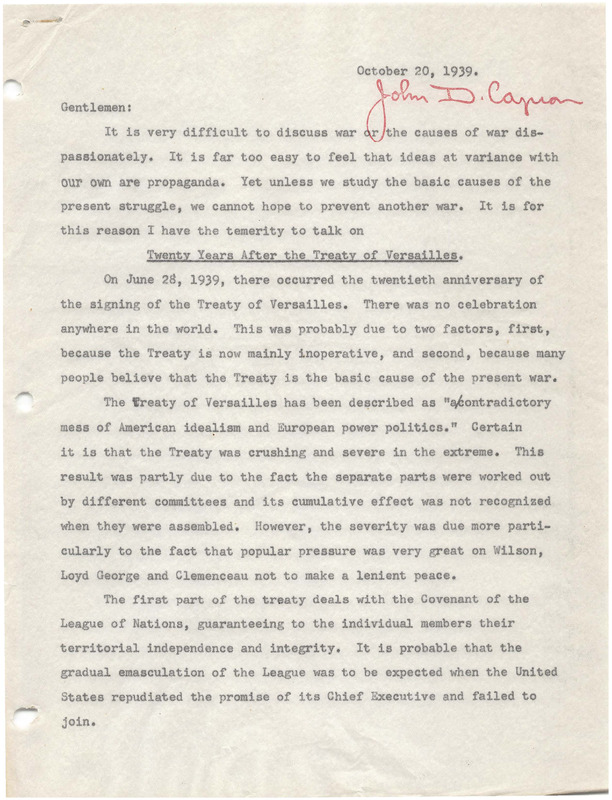
Text of a paper by John Capron, delivered to the SPHEX Club on October 20, 1939, examines the consequences of the Treaty of Versailles, 20 years post-signing. It critiques the treaty's role in precipitating World War II, highlighting its failure to celebrate or fulfill its intended goals, particularly in fostering global peace and stability. Capron argues that the treaty, with its punitive measures against Germany, including territorial losses and reparations, directly contributed to the economic and political destabilization of Germany. This destabilization, he posits, created conditions ripe for the rise of dictatorships, notably Adolf Hitler's regime. The paper discusses the treaty's impact on various regions and the League of Nations' ineffectiveness, concluding that missed opportunities for peaceful adjustments post-World War I led to the inevitability of World War II.