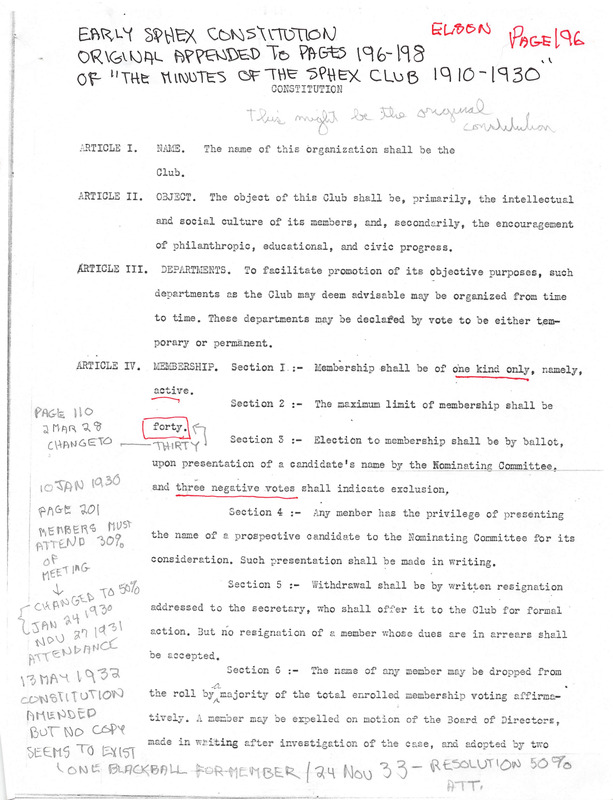
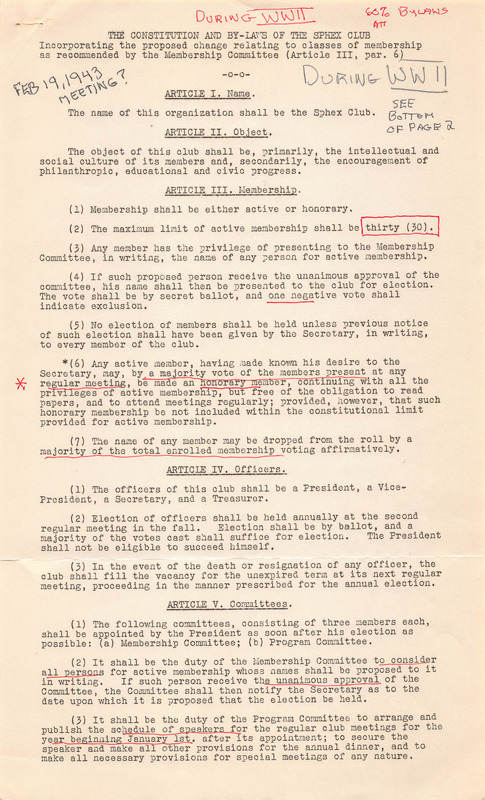
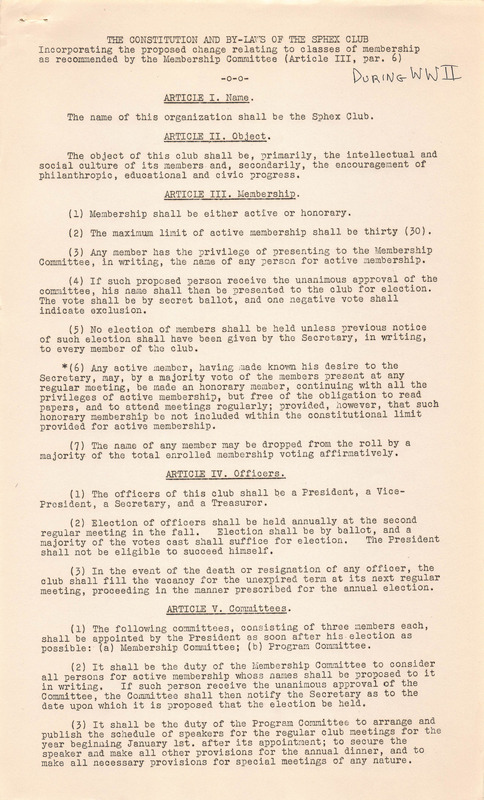
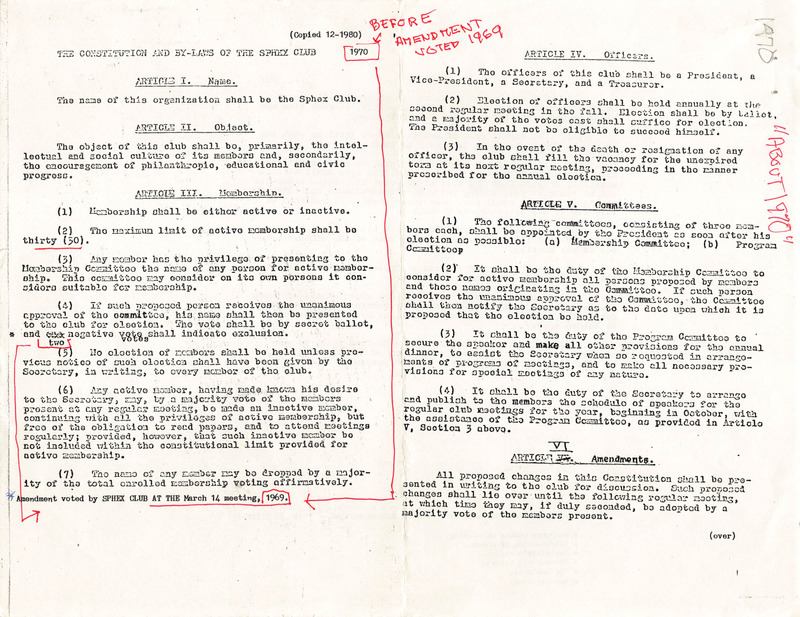
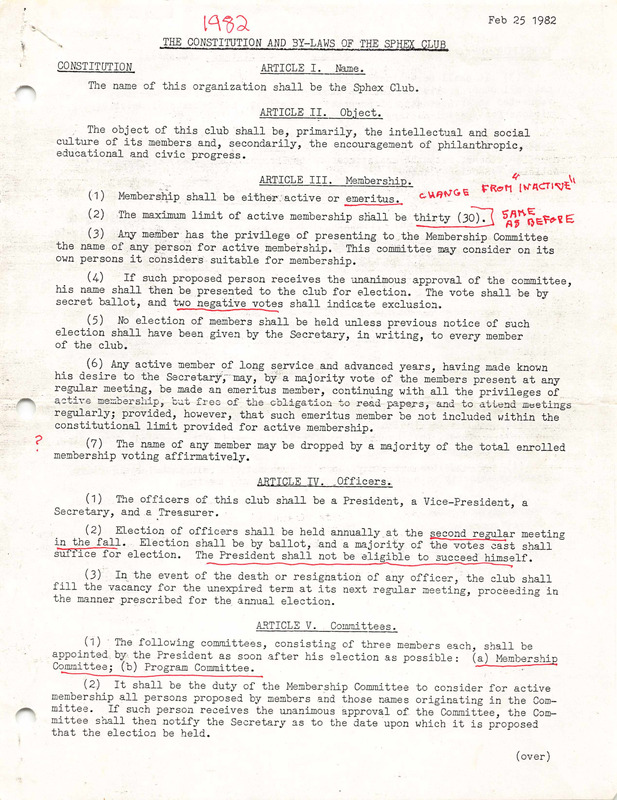
The collection of the Sphex Club, of Lynchburg, Virginia, includes minutes of meetings, the constitution and bylaws of the Club, a roster of its members, and a listing of Sphex papers presented by members and guests of the Club. In addition to this guide, the collection is outlined in more detail in “Sphex in the Jones Memorial Library,” Chapter VI of the Club history, The Sphex Club of Lynchburg, Virginia: The First One Hundred Years, 1910-2010, by James M. Elson.
Access Rights
Lectures delivered by members appear as papers in the Item Set. Papers are available in print at the library. Select papers have been digitized (including all papers delivered to the Club prior to 1952).
Authors retain copyright to their work. Papers may not be reproduced or reprinted without permission of the author and the library.
Text of a lecture to the Sphex Club in Lynchburg. The paper reflects on integrating Shakespearean quotes and themes into medical education, emphasizing their relevance in understanding human nature and enhancing patient care. The author draws parallels between Shakespeare's works and various aspects of medical practice, including diagnosis, patient interaction, and mental health. The presentation also touches on the role of literature in enriching professional and personal lives.
The paper by Peter T. Marcy examines the realities of family life in the pre-industrial era, focusing on the 16th to 18th centuries. Marcy challenges the romanticized perceptions of this period, highlighting the harsh conditions, high infant mortality rates, and the impact of physiological factors on families and family size. Through historical evidence, he discusses the effects of nutrition, disease, sterility, and social practices on fertility and family structure, offering a comprehensive look at the demographic realities that contrast sharply with the idealized views of the past. The paper meticulously explores the determinants of family size, including marriage age, duration of marriage, birth intervals, and the physiological underpinnings of fertility, providing a nuanced understanding of historical family dynamics.
The paper, "She Will Sing the Savageness out of the Bear," by Charlene Suny Monk, explores the historical and cultural significance of shape note singing, a distinctive American musical notation and singing style that simplifies music reading for vocalists. Monk, through personal anecdotes and extensive research, elucidates the origins, development, and resurgence of shape note music, particularly focusing on its community-building role and its use in sacred and secular contexts. The lecture navigates through the evolution of shape note from its 18th-century New England roots to its proliferation in the American South, highlighting key publications, figures, and the differences between four- and seven-shape systems. Monk emphasizes shape note singing's unique blend of social recreation and spiritual expression, showcased in gatherings that reinforce communal bonds and musical heritage.
The paper "Shillings to Dollars" by Raymond H. Williamson discusses the evolution and function of "money of account" in colonial and early American history. It explores the use of various forms of money, such as tobacco and Spanish dollars, and the transition to the Federal dollar system. The paper is organized historically, addressing different time periods and regions, and highlights the persistent use of colonial monetary terms well into the 20th century.
Text of a lecture delivered to the Sphex Club in Lynchburg. Nina Salmon's talk focuses on the phenomenon of handedness, emphasizing the marginalization of left-handed individuals by the majority right-handed culture. She explores the etymology of language surrounding left-handedness, its causes, prevalence, and societal biases. By comparing left-handedness to other biological and physical minority traits, Salmon highlights cultural disadvantages and misconceptions. The talk concludes with an interactive component, revealing a higher prevalence of left-handedness among the SPHEX Club members than in the general population, suggesting potential benefits in creativity and intelligence for left-handed individuals.
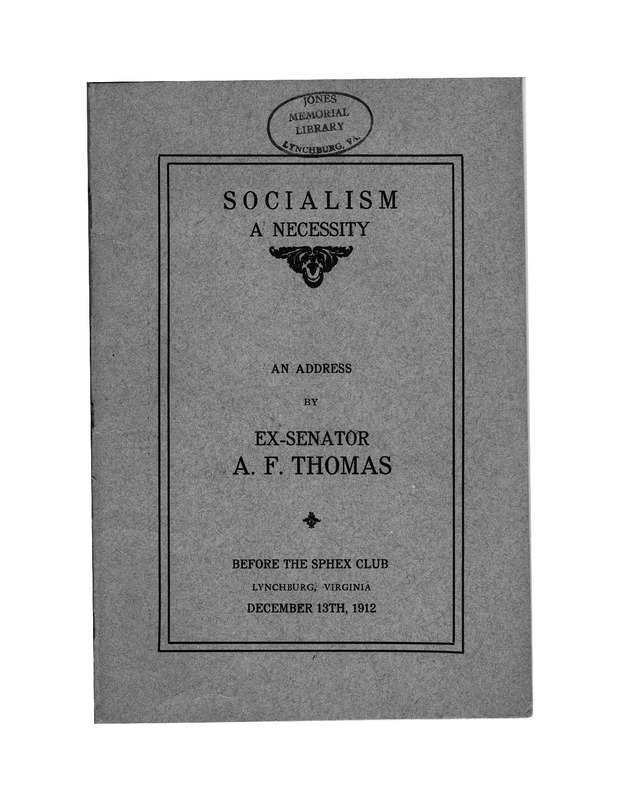
Text of a lecture to the Sphex Club in Lynchburg. The paper, "Socialism: A Necessity," by ex-Senator A. F. Thomas, discusses the urgency of adopting socialism to address societal and governmental inefficiencies. Thomas critiques the laissez-faire approach, advocates for government intervention in monopolies, and emphasizes the importance of cooperative principles for social progress. He also addresses the limitations of individualism and the necessity of socialism for equitable wealth distribution.
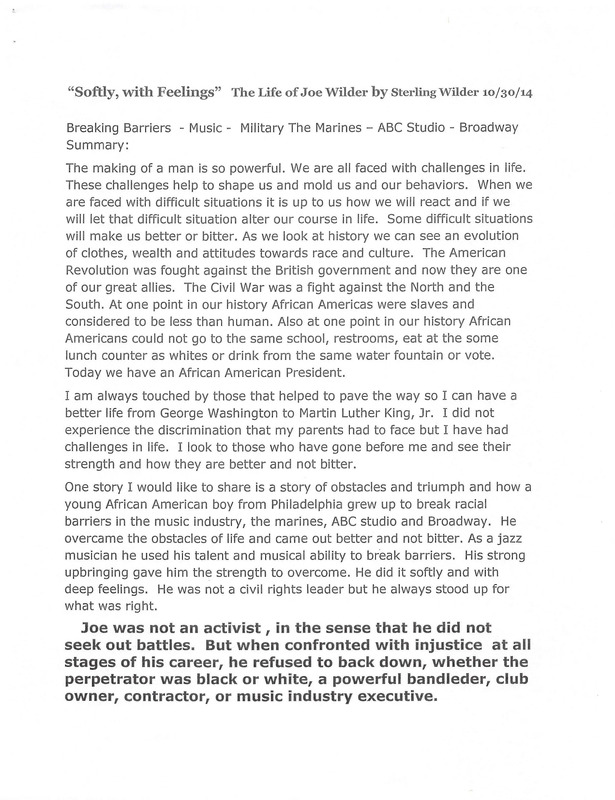
Text of a lecture delivered to the Sphex Club of Lynchburg. The paper "Softly, with Feelings" by Sterling Wilder explores the life of Joe Wilder, a pioneering African American jazz musician who overcame racial barriers in the music industry, military, and Broadway. It details his early life, musical influences, and career achievements, highlighting his resilience, dedication, and ability to rise above racial prejudices with grace and integrity.
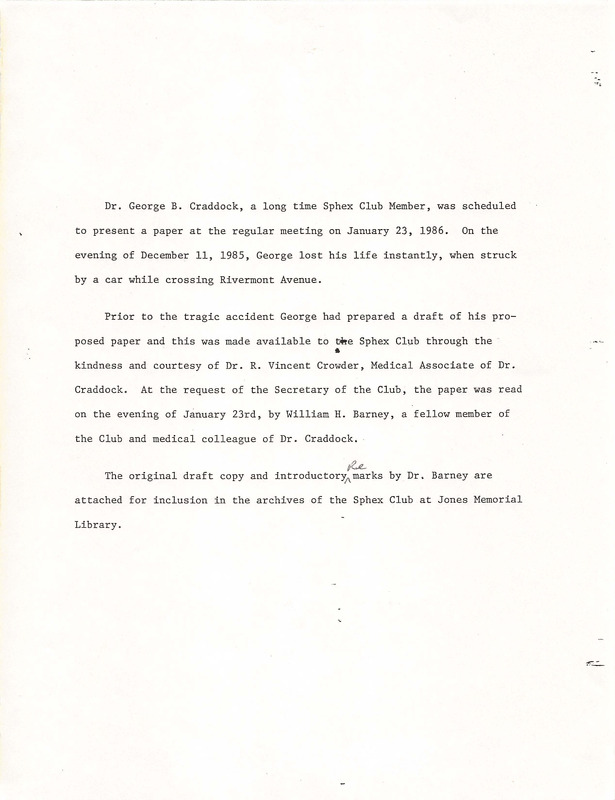
This paper, presented posthumously by Dr. George B. Craddock at a Sphex Club meeting, provides an in-depth examination of the medical and social aspects of the Gypsy community in the United States, focusing particularly on their health practices, cultural norms, and interactions with the medical system. Dr. Craddock's paper, relying heavily on the work of Dr. James D. Thomas and other anecdotal evidence, offers a unique insight into the often nomadic and insular Gypsy community, highlighting their strong cultural coherence, traditional practices, and the challenges they face in integrating with mainstream medical services.
The narrative traverses various themes, historical contexts, and interpretations related to Christian theology, iconography, and the cultural traditions surrounding Christmas and the new year, specifically in medieval and early modern Europe. It references academic interpretations, personal anecdotes, and detailed analyses of art and literature to explore these themes.
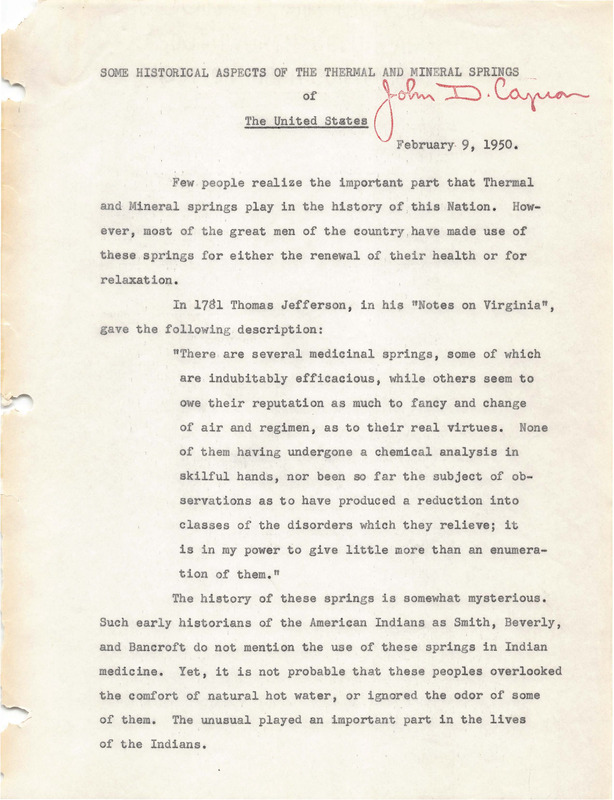
Text of a lecture to the Sphex Club in Lynchburg. The paper, titled "Some Historical Aspects of the Thermal and Mineral Springs of the United States," provides an exhaustive historical account of mineral springs in the U.S., emphasizing their importance in American history, health, and society from the colonial period through the 19th century. It details the various medicinal uses and social aspects of these springs, the people who frequented them, and their cultural significance, especially in Virginia. The study also highlights the evolution of public and medical perception of these springs over time.
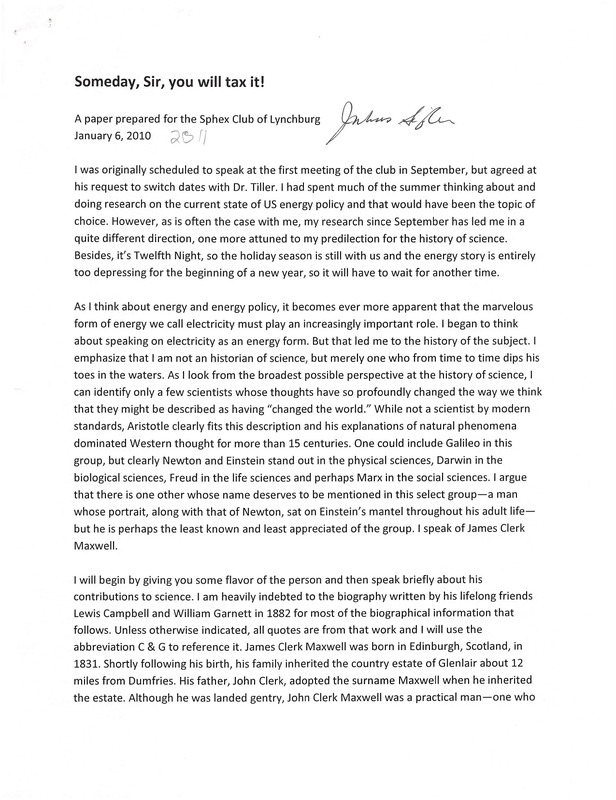
Text of a lecture delivered to the Sphex Club in Lynchburg. This academic paper provides an in-depth exploration of James Clerk Maxwell's life, his groundbreaking contributions to the field of electromagnetism, and the profound impact his work has had on both the scientific community and the world at large. The paper delves into Maxwell's early life, his education, and the evolution of his scientific thought, leading to his development of the four partial differential equations known as Maxwell's equations. These equations fundamentally changed our understanding of electricity, magnetism, and light, predicting the existence of electromagnetic waves beyond those visible to the human eye, thereby laying the groundwork for modern physics and technologies like radio communication. The author emphasizes Maxwell's role as a pivotal figure in science, whose theories have significantly influenced subsequent developments, including Einstein's theory of relativity.
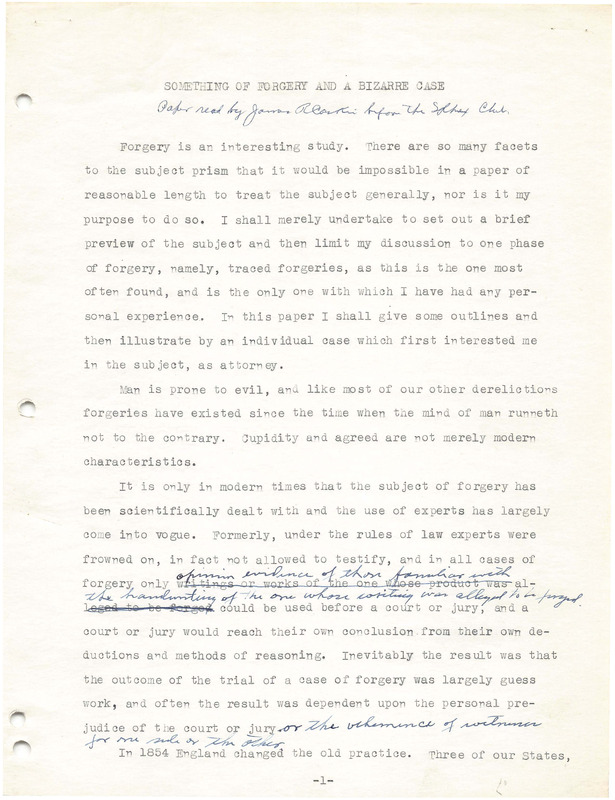
Text of a lecture to the Sphex Club in Lynchburg. Caskie's 1946 paper focuses on traced forgeries, a common type of forgery characterized by close imitation of original signatures. It discusses the role of experts in forgery detection, changes in legal practices regarding expert testimony, and specific features of traced forgeries, illustrated through a case study.
James R. Caskie's lecture to the SPHEX Club on "Moses and the Law" elucidates the Mosaic Code's depth and relevance. Caskie argues that the laws, often viewed as arbitrary religious commands, were strategically designed to govern a theistic state through democratic principles, ensuring social, moral, and governmental integrity. He emphasizes that the laws, including the iconic Ten Commandments, provided a foundation for individual responsibility and national identity, profoundly influencing subsequent legal systems worldwide.
This paper by Col. William McIntosh titled "Songs from the Wood," focused on the Cherry Tree Carol's origins, symbolism, and cultural journey through music and illustration. McIntosh's speech, enriched by historical slides and audio clips, explores the carol's roots in European folklore, its portrayal in medieval woodcuts, and its depiction in Jeanyee Wong's illustrated book from 1951. He discusses the song's evolution from William Byrd to Jethro Tull and its symbolic representations, emphasizing the transition of the cherry tree's imagery and its speculated significance. The actual paper was not submitted. This summary was written for the minutes.
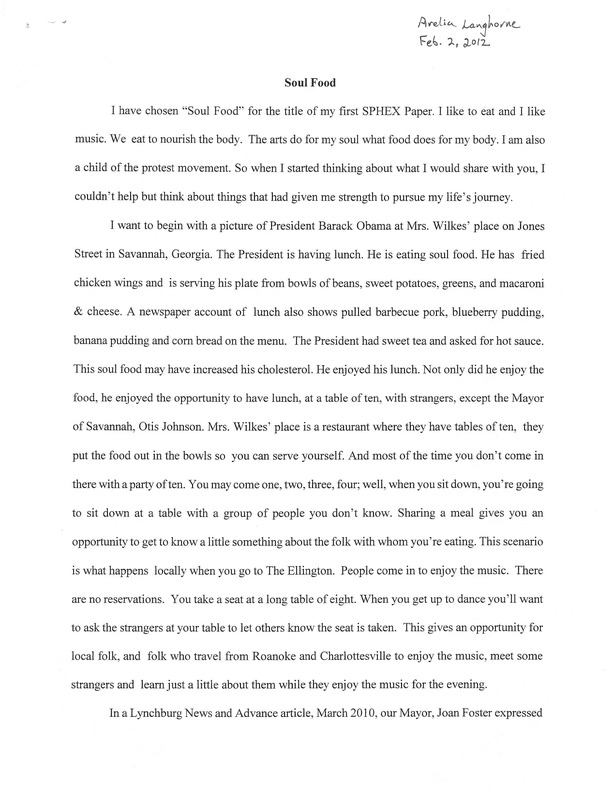
Text of a lecture delivered to the Sphex Club of Lynchburg. Arelia Langhorne's SPHEX paper titled "Soul Food" intertwines the themes of nourishment, music, and social justice. Langhorne draws parallels between the physical sustenance provided by soul food and the spiritual and cultural nourishment offered by music and shared experiences. The paper highlights a visit by President Obama to Mrs. Wilkes' dining establishment, emphasizing communal dining and its role in fostering connections. It transitions into a comprehensive examination of the civil rights anthem "We Shall Overcome," tracing its evolution from a slave song to a hymn by Charles Albert Tindley, and its pivotal role in the labor movement, civil rights activism, and global struggles for justice. Langhorne underscores the song's transformative power, illustrating its adaptability and enduring relevance across various contexts and movements for change.